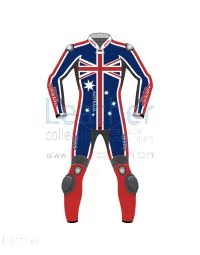
 Canada
  Brazil
  Germany
  France
  Italy
Italy  Switzerland
  Sweden
  Spain
Spain  Great Britain
  Norway
  Russia
  South Africa
  Japan
Japan  New Zealand
  Australia
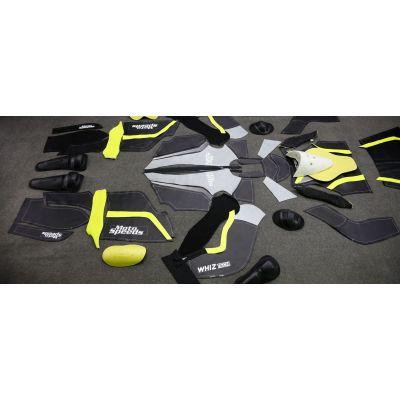
A race suit has one main job: keep the armor in the right place and the leather on the body during a slide. Off-the-shelf suits are cut for an average build, so riders with longer arms, a shorter torso or a strong tuck position often find that a standard size only fits in places. A made-to-measure suit is cut to the rider instead, and this guide explains where that matters and where it does not.
Key Takeaways
- Armor only works where it sits over the joint, so fit is a safety factor as well as a comfort factor.
- Garment standards (EN 17092) and impact protector standards (EN 1621) are separate; a suit is classed AAA, AA or A depending on abrasion and impact performance.
- Custom orders allow a choice of leather, such as kangaroo, which can be cut thinner and lighter than cowhide.
- Lining, ventilation and branding are the other choices that a made-to-measure order opens up.
- A custom suit does not remove risk; it improves how closely the suit matches the rider.
The Anatomy of Fit: Safety Beyond the Label
The primary function of a racing suit is to keep armor in the correct place during an impact. Standard sizes are designed for "average" proportions, which rarely match a dedicated rider. If a suit is too loose, the elbow or knee protectors can move during a slide and leave the joint exposed to the asphalt.
Why a Custom Fit Supports Protection
Armor position: A is measured to the rider's limb lengths, so protectors can sit over the joints they are meant to cover.
Less loose material: A close fit leaves less excess leather to catch or bunch during a tumble.
Back hump and neck: The aerodynamic hump can be placed to suit the rider's helmet and riding tuck.
What the Standards Cover
Two separate European standards apply. EN 17092 covers the garment and defines classes: AAA is the highest protection and often comes with ergonomic and weight penalties, AA covers the widest range of riding, and A is lighter, for warm conditions (summary by SATRA). Impact protectors are tested separately: EN 1621-1 covers limb-joint protectors and EN 1621-2 covers back protectors, each with Level 1 and Level 2. A suit and its armor therefore need to be checked individually.
Ergonomics and Performance
Beyond safety, fit affects how long a rider can stay precise in a session. Standard suits can bunch behind the knees or restrict the chest when breathing hard, which adds fatigue. A suit cut to the rider's attack position reduces the effort needed to hold a racing tuck.
Where Made-to-Measure Construction Helps
Movement: Stretch panels can be placed where the rider's body needs them, such as the underarms and back, to ease transitions across the seat.
Pre-curved shape: The arms and legs are shaped for the rider's own tuck rather than a general curve.
Ventilation: Perforation can be chosen and positioned for hot climates, in areas where it will not weaken the leather.
The Customization Process
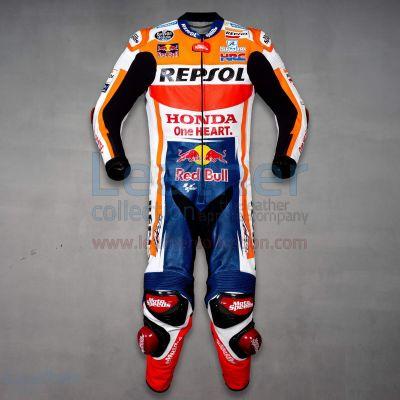
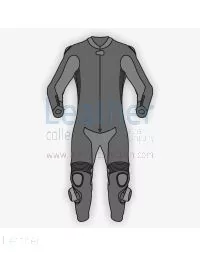
Most off-the-shelf suits use standard cowhide. A custom order can specify kangaroo leather instead. Kangaroo hide has parallel fiber bundles that let it be cut very thin while keeping strength, which is why it is popular for motorcycle leathers (see Wikipedia: kangaroo leather). Suits such as the and the show the typical one-piece race cut that a custom order starts from.
Key Options to Consider
Material: Cowhide is thicker and more widely used; kangaroo can be cut thinner and lighter while keeping strength. The garment's EN 17092 class shows abrasion performance.
Lining: Removable, washable mesh linings keep a suit hygienic after track days.
Branding: Names, numbers and sponsors can be applied as leather patchwork. Riders who prefer ready-made styling can look at for reference.
Making the Final Decision
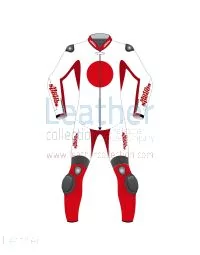
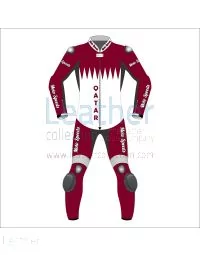
A is made to order, so it needs measurements and a longer lead than picking a standard size. For riders on track regularly, the closer match to their body is usually the reason to choose it. Those still deciding can compare with in standard patterns.
Summary of the Comparison
Standard suits: Quicker to choose, cut for an average build, with fewer options to change.
Custom suits: Measured to the rider, with a choice of leather, lining, ventilation and branding.
Final Thoughts
Whether racing in a club series or riding track days at weekends, protective gear does its job when it fits. A custom suit is a way to match the suit to the rider, not a substitute for good armor and sensible riding.
Frequently Asked Questions
Does a custom race suit protect better than a standard one?
Not automatically. Protection depends on the leather, the armor and its tested standard, and on how the suit stays in place. A made-to-measure fit helps protectors stay over the joints they are meant to cover, but no suit can remove the risk of a crash. Check the EN 17092 class and the armor standard.
What do the EN 17092 classes AAA, AA and A mean?
EN 17092 is the European standard for motorcycle clothing. Class AAA gives the highest abrasion and impact performance and may add weight and restriction. AA suits a wide range of riding, and A is lighter for warm weather. Classes B and C cover garments without impact protectors or that only carry protectors.
Is kangaroo leather better than cowhide for race suits?
Kangaroo leather can be cut much thinner than cowhide while keeping strength, so suits can be lighter and more flexible. Cowhide is thicker and widely used. The better choice depends on whether the rider prioritizes low weight and movement or a thicker hide. The EN 17092 class on the garment shows abrasion performance for either material.
What is the difference between EN 17092 and EN 1621?
EN 17092 tests the whole garment, including abrasion resistance and seam strength. EN 1621 tests the armor itself: part 1 covers limb-joint protectors and part 2 covers back protectors, each at Level 1 or Level 2. A complete suit needs both a suitable garment class and suitable armor.
Written by the Leather Collection Editorial Team.