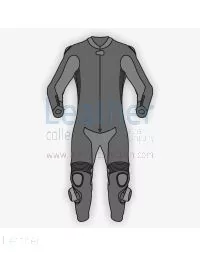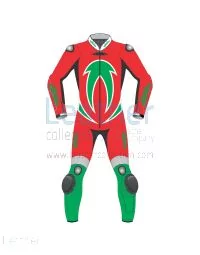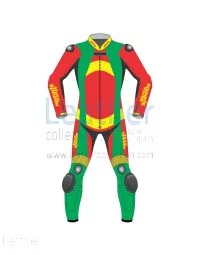
 Canada
  Brazil
  Germany
  France
  Italy
Italy  Switzerland
  Sweden
  Spain
Spain  Great Britain
  Norway
  Russia
  South Africa
  Japan
Japan  New Zealand
  Australia
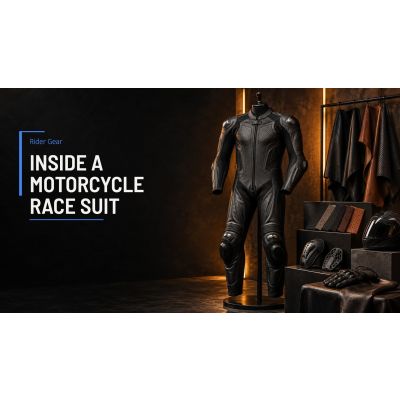
Introduction: Why Materials Decide How a Suit Performs
A racing suit is the only layer between a rider and the asphalt in a slide. Well-made do more than look the part: the leather, armor, stitching and panels decide how the suit slides, how much impact reaches the body and how comfortable a session feels.
This guide explains what these suits are made of, how each material protects, and why every detail matters, from leather types to stretch panels and protective armor.
Key Takeaways
- Race suits are built mainly from cowhide or kangaroo leather, and kangaroo is generally used thinner than cowhide.
- In the EU, motorcycle clothing is tested under EN 17092, the current standard for motorcycle protective clothing; Class AAA is the top class for race-style suits.
- Armor sits in the shoulders, elbows, hips, knees and back, tested separately under EN 1621; MotoGP has required airbag systems since 2018.
- Stretch panels, perforation, liners and reinforced seams handle movement, heat and slide protection.
Table of Contents
- Introduction
- Why Materials Matter in Motorcycle Track Suits
- Types of Leather Used in Racing Suits
- Safety Standards and CE Certifications
- Built-in Armor and Crash Protection
- Stretch Zones and Flex Materials
- Airflow, Perforation, and Comfort Liners
- Reinforced Stitching Techniques
- Importance of Custom Fit in One Piece Motorcycle Suits
- Conclusion
- FAQs
Why Materials Matter in Motorcycle Track Suits
A racing suit works as a second skin. It has to resist abrasion, reduce impact and still allow movement. Every fabric, layer and panel has a purpose. From street riding to MotoGP Racing Suits, the choice of material shapes both safety and performance, and covers the replica-style suits inspired by those riders.
Types of Leather Used in Motorcycle Suits
Kangaroo Leather
Kangaroo leather is thinner and lighter than cowhide while resisting tears and abrasion well, which is why it is common in pro-level suits. It suits track-focused riders who want performance with less weight and fatigue.
Cowhide Leather
Cowhide is the classic choice for Leather Motorcycle Suits. It is thick, durable and absorbs abrasion well. Thickness varies by maker, so check the figures a maker publishes. A full-leather example is the .
More options are listed under .
Why Leather Matters
Leather resists abrasion and slides in a controlled way, which is why it remains the standard material for race suits. Leather resists abrasion in a slide, but protection also depends on fit, armor and seams, and no suit prevents injury.
CE Standards and Material Certifications
EN 17092 is the current standard for motorcycle protective clothing; the older EN 13595 (professional riders) ran alongside it and was due to be withdrawn by March 2023 at the latest. The standard is split into parts, and the race-style class, AAA, is covered by EN 17092-2. Materials such as cowhide and kangaroo leather are tested for abrasion, tear strength and seam burst strength (SATRA overview of EN 17092).
Understanding CE Ratings
Armor is rated separately under EN 1621, in Level 1 and Level 2. Level 2 protectors must transmit less force than Level 1, which can make them stiffer or heavier. Check the label of any suit or protector for the standard and level stated by the maker.
| Standard | Test Focus | Abrasion Requirement (highest-risk zones) |
|---|---|---|
| EN 17092-2:2020 (Class AAA) | Abrasion, tear, seam strength | Highest of the three |
| EN 17092-3:2020 (Class AA) | Abrasion, tear, seam strength | Intermediate |
| EN 17092-4:2020 (Class A) | Abrasion, tear, seam strength | Lowest of the three |
Race-style suits such as are listed with their own details. Whether a particular suit carries an EN 17092 class is stated on its label and product page; check it before buying.
Crash Protection: Internal & External Armor
Most race suits carry removable armor at the shoulders, elbows, knees, hips and back. Typical additions include:
- External sliders at high-contact points
- Integrated back and chest protectors
- Airbag systems, compulsory for MotoGP riders since 2018 and required to cover at least the shoulders and collarbone (Crash.net)
Armor should be removable, replaceable and correctly positioned so it covers the joint during a fall. Follow the armor maker’s guidance on replacing protectors after a crash.
Flexibility: Stretch Zones and Movement Panels
High-mobility zones such as the inner thighs, behind the knees and the armpits use stretch material. Suits commonly combine accordion-style leather with stretch fabric panels. This lets riders hold an aggressive posture comfortably.
It also reduces fatigue over long sessions, which makes a One Piece Motorcycle Suit easier to ride in.
Breathability: Perforation and Inner Comfort
Perforated leather panels and moisture-wicking liners help in warm weather. Vent zones allow airflow while the surrounding leather protects the skin. Suits often feature:
- Perforated chest, thighs and arms
- Mesh inner liners, sometimes removable
- Anti-bacterial and anti-odor treatments
Moisture Management
Some suits add textured or bubble-style liners that lift the suit slightly off the skin. The air channels help sweat evaporate, which matters in endurance sessions and hot climates.
Stronger Together: Reinforced Safety Stitching
CE testing includes seam burst resistance. Race suits use reinforced seams, commonly double-stitched with strong synthetic thread, and makers tend to position seam lines away from the main slide surfaces.
This small detail matters in a crash: weak stitching lets a seam open and exposes the rider.
Tailored for You: Custom Fit for Motorcycle Racing Suits
Fit affects safety. A loose suit shifts in a crash, and a tight one restricts movement. Made-to-measure suits are cut to the rider’s own measurements, which helps armor sit over the joints and keeps the suit comfortable in a riding position.
They suit track riders and anyone who wants a close fit with full protection.
Sizing options for different riders are listed under .
Measurement Tips for the Right Fit
Take measurements over base layers, not street clothes. Key areas include chest, waist, hips, inseam and torso length. A well-fitted suit reduces armor movement and helps the leather stay where it is needed in a slide.
Final Thoughts: Materials, Armor and Fit Work Together
Motorbike Racing Suits combine leather, armor, stretch panels and reinforced seams, and each part affects the others. Whether the goal is sport riding or competition, the armor (check the EN 1621 marking and level stated by the maker), the leather type and the stitched seams all shape how the suit behaves in a fall.
Check the label, compare the materials and match the fit to the riding position before buying.
Frequently Asked Questions
What is the most common material for motorcycle racing suits?
Leather is the standard material, mostly cowhide and kangaroo. Cowhide is thicker and absorbs abrasion well, while kangaroo is thinner and lighter yet still tear and abrasion resistant. Many race-suit makers use one or the other, and some combine them in different zones.
What does EN 17092 Class AAA mean for a race suit?
Class AAA is the highest class in EN 17092, the current standard for motorcycle protective clothing. It sets the strictest abrasion, tear and seam requirements; the abrasion requirement in the highest-risk zones is the strictest of the classes. Impact protectors tested under EN 1621 are required at the shoulders, elbows, hips and knees.
Are airbags part of a racing suit?
Airbag systems are built into or worn with some suits. MotoGP made airbag systems compulsory from 2018, covering at least the shoulders and collarbone. For track days and amateur racing, airbag use depends on the event rules and the rider’s choice, so check the organizer’s requirements.
Why does fit matter in a racing suit?
A loose suit lets armor shift away from the joint in a fall, and a tight one restricts movement. Made-to-measure cutting places the armor over the knees, elbows and shoulders and keeps the suit comfortable in a tucked riding position.
Written by the Leather Collection Editorial Team.