 Canada
  Brazil
  Germany
  France
  Italy
Italy  Switzerland
  Sweden
  Spain
Spain  Great Britain
  Norway
  Russia
  South Africa
  Japan
Japan  New Zealand
  Australia

A first scratch on leather riding looks worse than it is. Leather can be repaired, and a professional is not always needed.
If a jacket, suit or other gear has scratches, faded color or small tears, there is no need to panic. This leather repair guide shows how to restore small damage on leather at home.
No special tools are needed, only patience, the right steps and a little confidence.
Key Takeaways
- Small scratches, faded color and minor tears can often be repaired at home with a cleaner, conditioner, filler and matching color.
- Always clean the area first and test every product on a hidden spot before using it on a visible one.
- Thin layers and full drying or curing time between steps give a more natural result than heavy application.
- Large tears, structural damage and impact zones on riding gear need professional repair, and cosmetic repairs do not restore protection.
Table of Contents
Why Leather Repair Is Worth It
Leather ages. That's normal. But damage does not always mean replacement.
Good leather is strong. When you repair it early, you:
- Stop damage getting worse
- Avoid the cost of replacing the garment
- Keep the gear comfortable to wear (cosmetic repairs do not restore abrasion or impact protection)
- Keep your gear looking sharp
Small damage is easier to fix early. Left alone, a scratch or crack keeps flexing with every wear, so repairing it sooner helps avoid deeper cracks and tears.
Cosmetic repairs do not restore abrasion or impact protection. Have any tear, split seam or other damage on a riding suit or jacket assessed by the maker or a specialist repairer before riding.
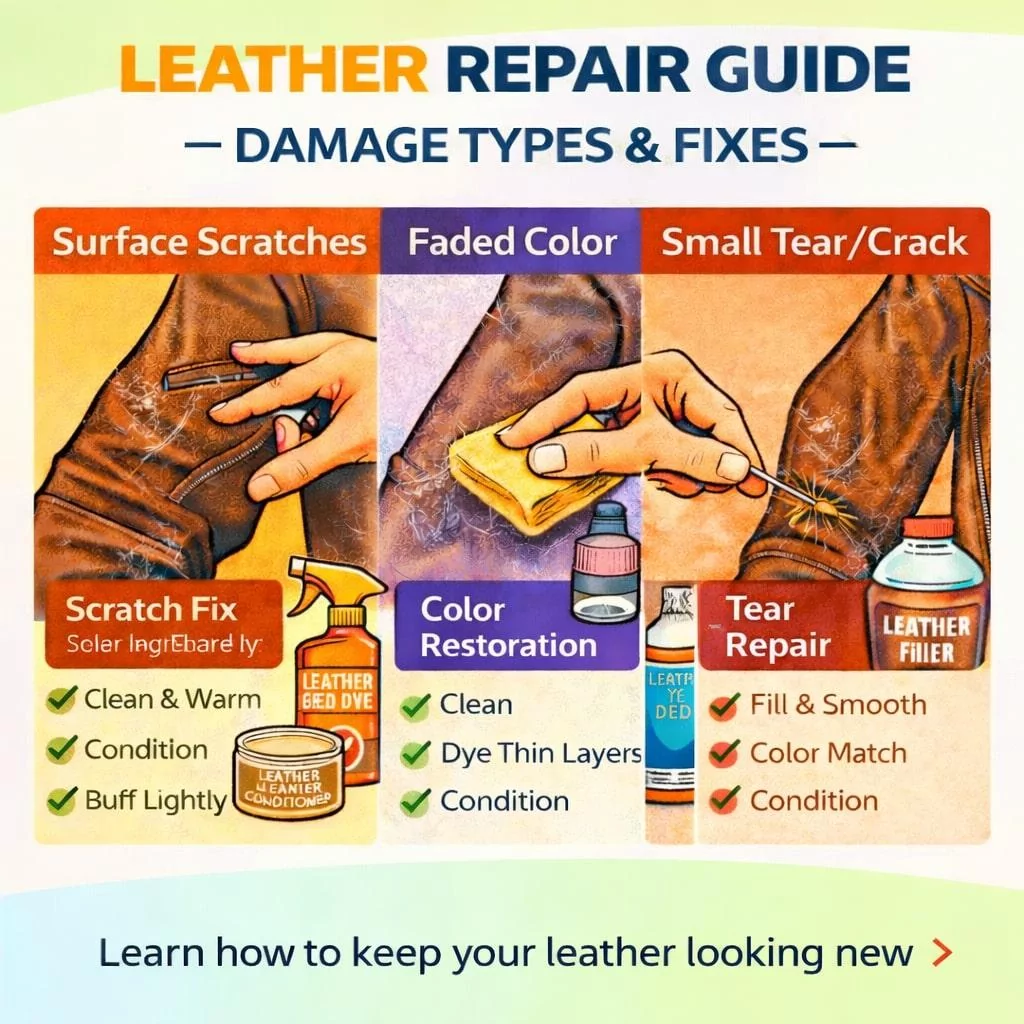
Common Types of Leather Damage
Before fixing anything, you must identify the problem.
1. Surface Scratches
These are light marks caused by friction or contact.
2. Faded Color
Sunlight, heat, and sweat pull color out of leather. Guidance from the Canadian Conservation Institute, written for museum collections rather than worn clothing, notes that dyes are often among the parts most susceptible to light and UV fading, and that heat can dry leather out. For worn clothing, the garment's care label governs.
3. Small Tears or Cracks
Usually appear on elbows, knees, or seams.
This guide covers only small, home-repair-safe damage. Large tears or deep structural damage need professional repair.
Basic Tools You'll Need
Expensive equipment is not required.
DIY Leather Repair Kit
- Soft microfiber cloth
- Leather cleaner
- Leather conditioner
- Leather repair compound or filler
- Matching leather dye or balm
- Small sponge or applicator
Important: Always test products on a hidden area first.
How to Fix Leather Scratches
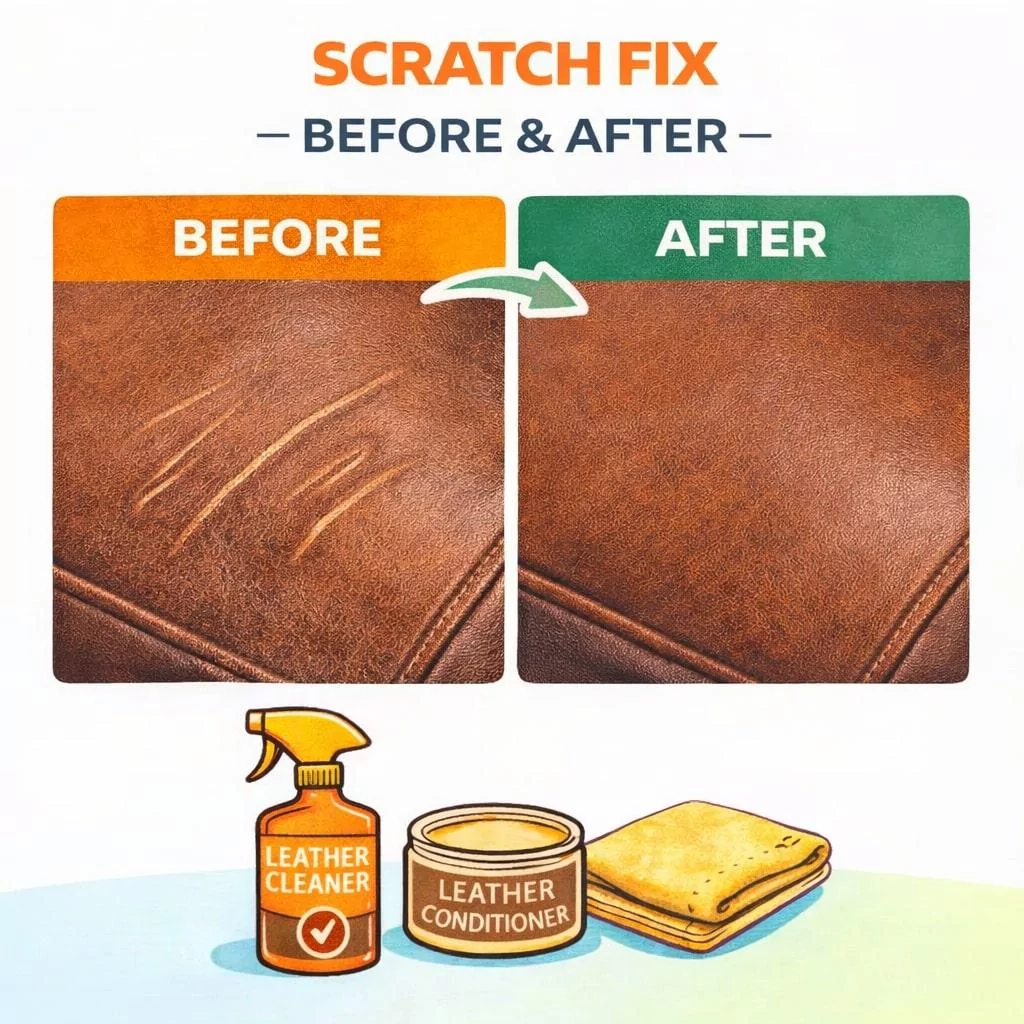
Scratches are the most common type of leather damage—and luckily, they are also the easiest to fix at home. Most surface scratches do not damage the leather deeply. With proper cleaning, conditioning, and gentle handling, you can reduce or completely remove their appearance.
Step-by-Step Scratch Fix
Step 1: Clean the Area
Start by gently wiping the scratched area with a leather-safe cleaner and a soft microfiber cloth. This removes dust, sweat, and oils that can block the repair process. Never scrub aggressively, as this can spread the scratch or dry out the leather.
Step 2: Warm the Leather
Lightly rub the scratched area using clean fingers. The natural warmth from your hands helps soften the leather and allows its natural oils to rise. For shallow scratches, this step alone can noticeably reduce their visibility.
Step 3: Apply Leather Conditioner
Apply a small amount of a leather conditioner suited to the leather's finish, following the product's instructions, using a clean cloth. Massage gently in circular motions and allow the conditioner to absorb. This can restore moisture and flexibility and help the leather regain a uniform appearance.
Step 4: Buff Lightly
Once the conditioner has absorbed, buff the area lightly with a dry, clean cloth. This evens out the surface and blends the scratch into the surrounding leather. In many cases, scratches will fade significantly or disappear completely.
If the scratch remains visible, apply a tiny amount of color-matched leather balm or cream. Use very thin layers and blend carefully to avoid dark spots or buildup.
How to Restore Faded Leather Color
Fading happens slowly, often from sunlight, heat, sweat, and regular wear. Many riders don’t notice the change until the leather looks dull, uneven, or washed out. The good news is that faded leather can often be refreshed at home when done the right way.
Step-by-Step Color Restoration
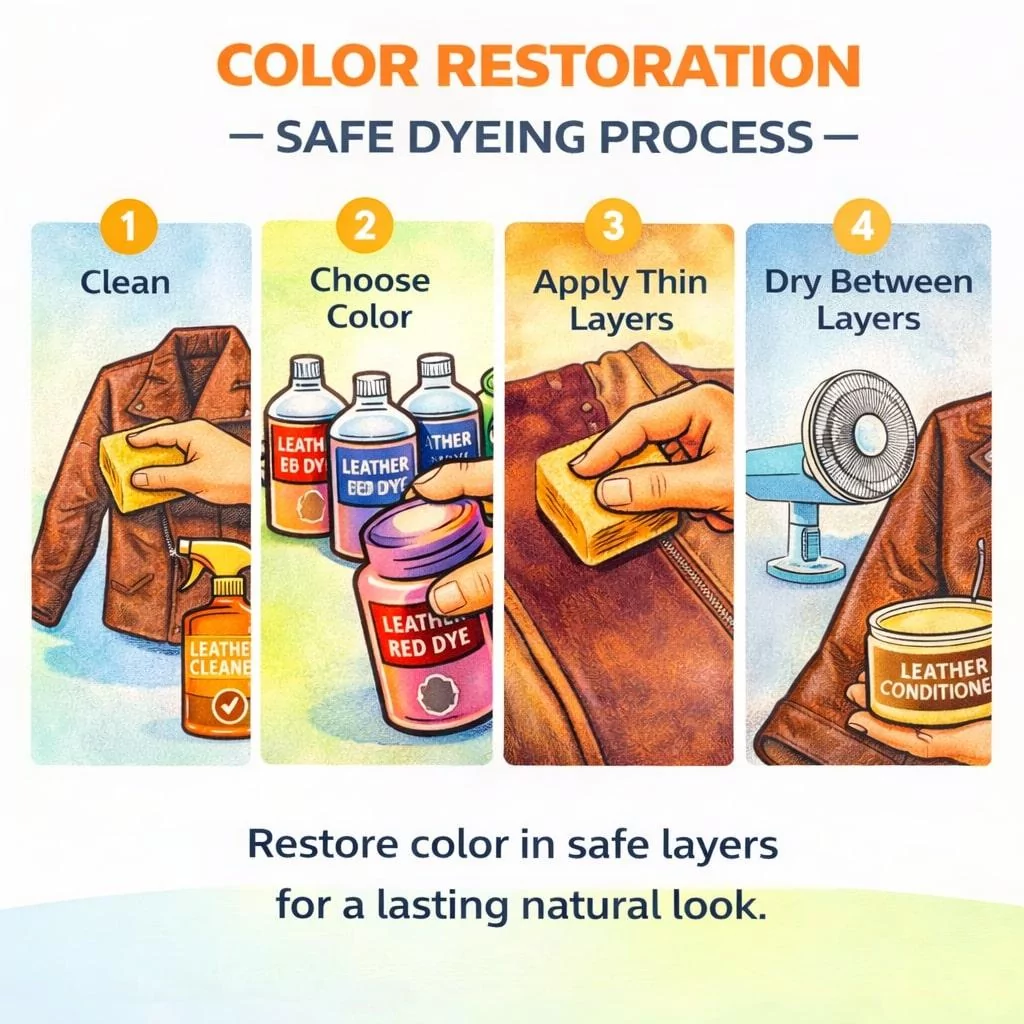
Step 1: Clean Thoroughly
Before restoring color, the leather must be completely clean. Dirt, oils, and residue prevent dye or balm from bonding properly. Use a leather-safe cleaner and allow the surface to dry fully before moving to the next step.
Step 2: Choose the Right Color
Carefully match the leather shade using a leather dye or color balm. If you are unsure, always start with a lighter tone. You can darken leather gradually, but reversing a color that is too dark is difficult.
Step 3: Apply Thin Layers
Use a sponge or soft applicator and apply color in thin, even layers. Dab gently rather than rubbing hard. Never pour dye directly onto the leather, as this can cause blotches and uneven coverage.
Step 4: Let It Dry
Allow each layer to dry completely before applying the next one. Patience is key here. Building color slowly creates a natural finish and prevents cracking or stiffness later.
Step 5: Finish
Once the final layer is fully dry, follow the dye or balm maker's instructions on sealing or conditioning. The right product depends on the leather's finish and the dye type, so test it on a hidden area first.
When done correctly, restored leather regains its rich look and natural depth—never shiny, heavy, or painted.
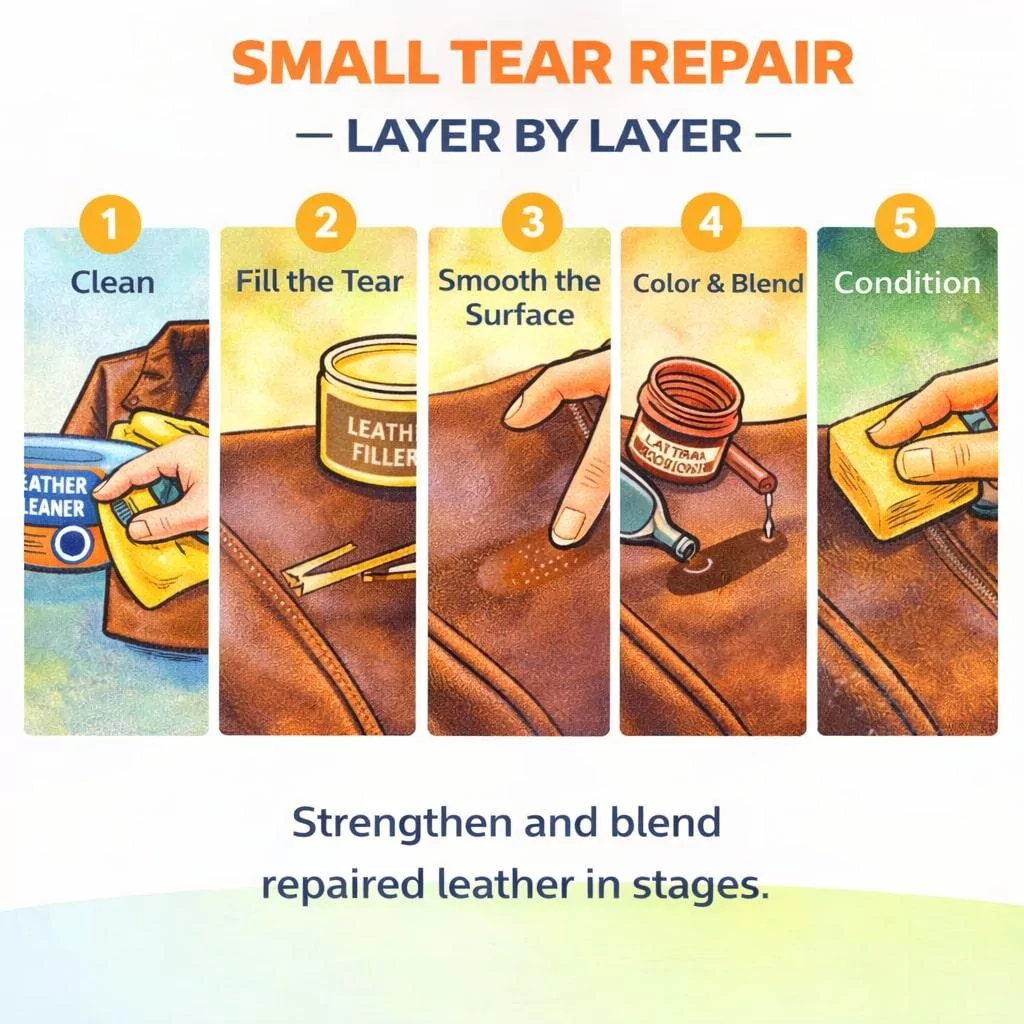
How to Repair Small Leather Tears
Small leather tears can look serious at first, but many of them are repairable at home when caught early. These usually appear in high-movement areas like elbows, knees, or seams. Fixing them early can stop a tear from spreading.
Important Rule
If you can fit a finger through the tear, stop immediately. Large or deep tears affect the structure of the leather and require professional repair to maintain safety and durability.
DIY Small Tear Repair Steps
Step 1: Clean and Dry
Clean the area thoroughly using a leather-safe cleaner. The surface must be completely dry before repair. Moisture or dust will prevent the filler from bonding properly.
Step 2: Apply Leather Filler
Using a toothpick or small spatula, apply a thin layer of leather filler directly into the tear. Press gently to fill the gap without forcing excess material onto the surface.
Step 3: Smooth the Surface
Carefully flatten the edges of the tear so they sit evenly. Light smoothing helps the repair blend naturally with the surrounding leather once cured.
Step 4: Let It Cure
Allow the filler to cure fully according to the product’s instructions. Do not rush this step. Proper curing ensures strength and flexibility in the repaired area.
Step 5: Color and Condition
Once cured, apply a small amount of matching leather color to blend the repair. Finish as the repair product's instructions say; whether a conditioner suits the repaired area depends on the finish.
When done correctly, this method can restore the leather’s appearance and help stop small tears from growing. It does not restore abrasion or impact protection.
Common DIY Mistakes to Avoid
A repair with the wrong product can add to the damage. Check the garment's care label and the repair product's instructions first.
Methods to Avoid
- Use super glue
- Use nail polish
- Use shoe polish on riding gear
- Dry with heat guns
- Over-apply filler or dye
These shortcuts can leave leather stiff or cracked. The right cleaner, dye or conditioner depends on the leather's finish and dye type, so test on a hidden area first.
After-Repair Care Tips
Repair is only half the job.
Aftercare
- Follow the repair product's instructions on conditioning
- Let the repair cure fully, following the product instructions, before riding
- Store away from sunlight
- Follow the garment's care label for cleaning
Riding gear that has been damaged should be checked by the maker or a specialist repairer before it is worn again.
When a garment is beyond home repair, replacement gear is an option. Racing leathers such as the are one example, and the following product is another:
Conclusion: Fix It Before It's Too Late
Leather tells a story. Scratches and marks are part of the journey. But damage does not have to ruin your gear.
This leather repair guide explains how to restore small damage on leather at home. Take your time. Use the right products. Respect the material.
Check riding gear that has been damaged with the maker or a specialist repairer before wearing it again.
Frequently Asked Questions
Can leather be repaired at home?
Yes, for small scratches, faded color and minor tears. Clean the area, use a conditioner for light marks, a filler for small tears and matching color for fading, and apply everything in thin layers. Large tears, deep structural damage and damage in impact zones of riding gear should go to a professional repairer.
Is a leather repair permanent?
A careful repair can last for a long time, but how long depends on the damage, the products and how the garment is used afterwards. Repairs in high-movement areas such as elbows, knees and seams flex constantly, so they may need touching up. Following the care label and the repair product's instructions helps a repair hold.
Can faded leather be recolored?
Yes, but it needs careful preparation. Clean the leather thoroughly, choose a dye or balm that matches the shade, and start lighter because dark color is hard to reverse. Apply thin layers with a sponge, let each one dry completely, then finish as the dye or balm maker's instructions say.
Does leather conditioner fix cracks?
Conditioner restores moisture and flexibility and helps prevent cracking, but it does not repair deep cracks or structural damage. Those need filler, color and sometimes professional work. Following the garment's care label and keeping the leather from drying out is the better way to avoid cracks.
When should a professional repair leather?
Choose a professional for tears large enough to fit a finger through, damage that affects the structure of the leather, and repairs on safety gear such as the impact zones of a race suit or jacket. A professional can also advise whether a panel should be replaced rather than patched.
Written by the Leather Collection Editorial Team.