 Canada
  Brazil
  Germany
  France
  Italy
Italy  Switzerland
  Sweden
  Spain
Spain  Great Britain
  Norway
  Russia
  South Africa
  Japan
Japan  New Zealand
  Australia

A leather jacket is often seen as a tough, rugged garment, so the question comes up as soon as the clouds turn grey: can a leather jacket be worn in the rain? Leather is a durable natural material, but its relationship with water is more complicated than its reputation suggests.
How a or any other jacket performs in wet weather depends on the type of leather, its finish and the care it receives after the downpour.
Key Takeaways
- Leather is water-resistant for a short time but is not waterproof.
- Finished smooth leather copes with rain better than suede and nubuck.
- Dry a wet jacket slowly at room temperature, away from direct heat, unless the care label says otherwise.
- Check the care label or ask the maker whether the leather needs conditioning once it is dry.
The Natural Resistance of Leather
Leather is a porous, organic material, so it can shed a light drizzle for a short period, but it is not naturally waterproof. In a heavy downpour the fibers soak up water and the jacket becomes heavier.
Why Leather Is Not Waterproof
Water can harm leather, and how much depends on the tannage and finish. Follow the garment's care label or the maker's instructions. That is why the care routine after rain matters as much as the rain itself.
How Different Leather Types Handle Rain
Smooth Leather and Suede
- Finished smooth leather: cowhide and similar hides carry a surface finish, so water tends to sit on the surface for a while, which gives time to find cover.
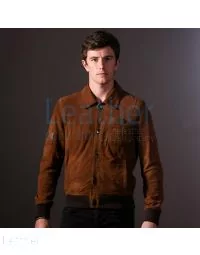
- Suede and nubuck: these napped surfaces are the most vulnerable and mark easily when wet. A suede style such as the is better kept out of heavy rain.
Motorcycle Leathers
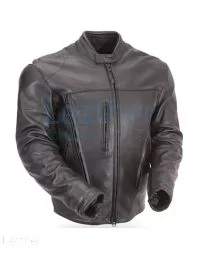
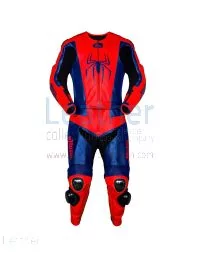
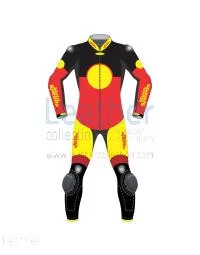
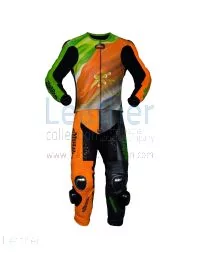
Riders who commute in wet weather often choose dedicated riding gear, such as the range, or a jacket with a removable rain liner. Race-style jackets, like the , are cut for the track rather than for a downpour. No leather garment is a raincoat, but some riding jackets include a removable rain liner, so check the product details.
Essential Tips for Wet Weather Maintenance
What happens after a soaking decides how long the jacket lasts. The basic steps are simple:
- Blot, do not rub: remove surface water, mud and road salt with a soft, dry cloth.
- Dry naturally: avoid hair dryers, radiators and direct sunlight, because high heat can distort leather. Hang the jacket on a wide, padded hanger in a ventilated room.
- Check the care label: once the jacket is dry, follow the label or ask the maker whether to condition it; the right product depends on finish and construction, and suede and nubuck need different care from smooth leather.
- Brush suede: after drying, a suede brush restores the nap.
Final Thoughts: Should You Wear It?
A water-repellent spray adds a surface layer but does not make leather waterproof, and it wears off. Use a spray intended for the leather's finish, following the product and garment instructions. Test it on a hidden area first, because it can change color. A jacket should not be the only layer in a storm, but a surprise shower does not ruin a well-kept one.
Frequently Asked Questions
Can I wear a leather jacket in light rain?
Yes, for a short time. Finished leather can shed a light drizzle, but it is not waterproof and the water will eventually soak in. Smooth finished leather copes better than suede or nubuck, which mark easily. After any wetting, dry the jacket slowly at room temperature and then follow the care label or the maker's instructions on conditioning.
How should a wet leather jacket be dried?
Blot the surface with a soft cloth, then hang the jacket on a wide, padded hanger in a ventilated room at room temperature. Avoid hair dryers, radiators and direct sun, because fast, high heat can distort leather, unless the care label says otherwise. Once it is dry, follow the care label or ask the maker whether it needs conditioning, as the right product depends on the finish.
Does water-repellent spray make leather waterproof?
No. A spray makes the surface water-repellent so water beads, but it does not make leather waterproof, and it must be re-applied as the effect wears off. Test it on a hidden area before treating the whole jacket, since some products darken or change the look of the leather.
Written by the Leather Collection Editorial Team.