 Canada
 Brazil
 Germany
 France
 Italy
 Switzerland
 Sweden
 Spain
 Great Britain
 Norway
 Russia
 South Africa
 Japan
 New Zealand
 Australia

Short answer: suede is leather with the flesh side buffed to a soft nap, while smooth leather shows the outer grain surface. Suede feels softer and more casual, but it stains and soaks faster. Smooth leather resists weather and wear better and is easier to wipe clean. For rain, daily wear and anything involving riding, smooth leather is usually the safer choice.
Suede vs smooth leather at a glance
| Feature | Suede | Smooth leather |
|---|---|---|
| Look | Matte, velvety, casual | Flat grain, matte to glossy, classic |
| Feel | Very soft, brushed nap | Smooth; softness depends on the hide |
| Warmth | Feels warm and soft; breathable | Windproof; warmth depends on lining |
| Durability | Scuffs, goes bald in spots, marks with grease | Scratches and creases but wears in rather than off |
| Water | Absorbs readily, rings and stains | Better, especially if finished |
| Stains | Show and are hard to remove | Often wipeable |
| Upkeep | Brush, protector, dry methods | Wipe, condition occasionally |
| Price | Varies with the hide and quality | Varies with the hide and quality |
What suede actually is
Suede is made from the underside of a hide, or from a split layer, brushed or buffed to raise a short, soft nap. Lamb, goat, calf and deer all make suede. It is a different surface from smooth leather, which shows the outer grain layer of the hide. Nubuck is related but different: it is grain-side leather sanded to a fine nap, generally a little tougher than suede. Our post on nappa, suede and nubuck finishes compares them in detail.
Look and styling
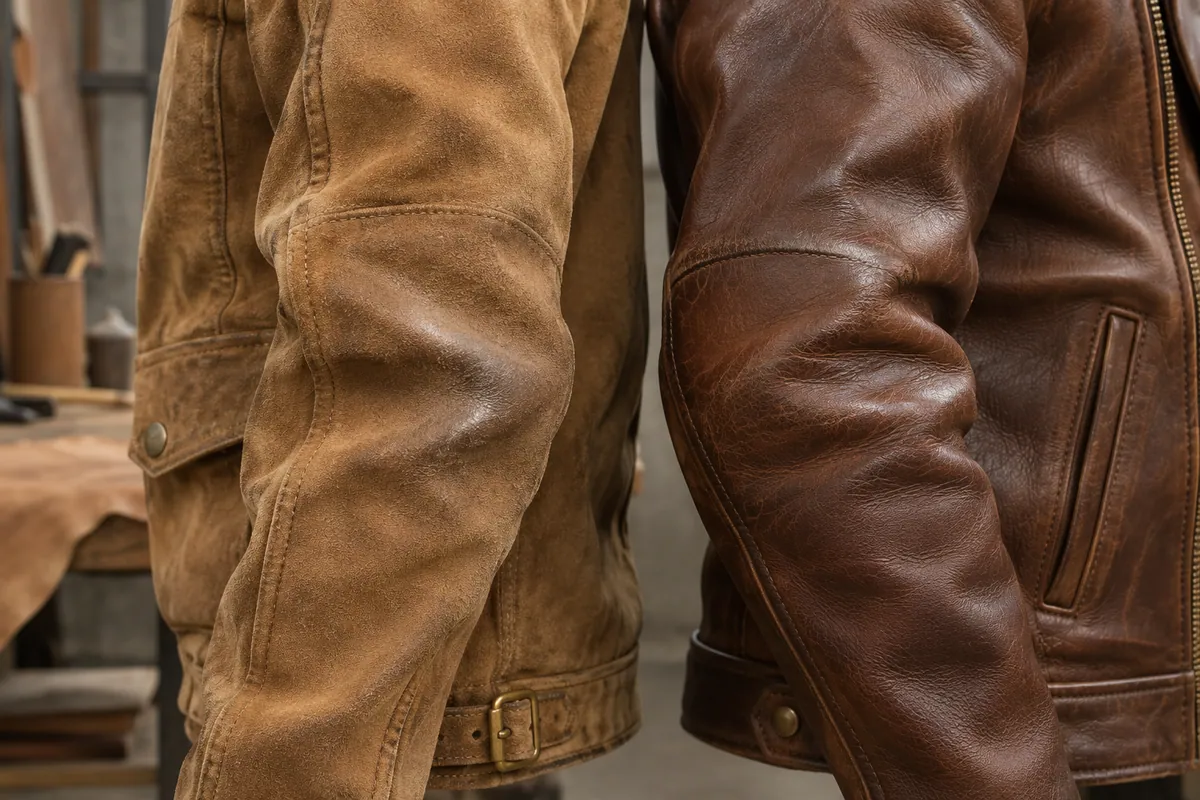
Suede reads as relaxed. It suits casual jackets, vests, skirts and weekend looks, and its soft nap takes color richly, especially in tan, brown, olive and navy. Smooth leather reads as sharper and more classic, from a black biker to a brown coat or a tailored blazer. Smooth leather ages by developing creases and a patina. Suede ages by flattening and darkening in patches where it rubs.
Color choices matter too. Dark smooth leather hides marks well. Light suede shows every spot, so many people pick mid or dark shades. For ideas by season, see seasonal leather styling.
Warmth and rain
Both materials block wind. Suede feels warmer to the touch and breathes well, while smooth leather's warmth comes mostly from its lining. In rain the gap is large. Water sinks into suede, leaving rings and flattening the nap, while finished smooth leather sheds a shower for a short while. Neither is waterproof. Our guide to whether leather is waterproof explains why and what treatments help.
Durability and wear
- Suede wears at the cuffs, elbows and pocket edges, where the nap flattens and goes shiny. Grease marks soak in and stay. It can last many years with care, but it asks for care.
- Smooth leather wears by scratching and creasing, which often adds character. A finished surface protects against stains, though scratches at the edges and seams will let water in.
Thickness and quality matter more than the surface alone. A thick, well-made suede can outlast a thin, poor smooth leather. Compare like with like.
Which should you buy?
| Use | Better fit | Why |
|---|---|---|
| City commuting on foot or by train | Smooth leather, or dark suede in dry climates | Handles drizzle and bag rub better |
| Riding a motorcycle | Thick smooth leather made for riding | See the note below on protection |
| Office and smart casual | Either; suede is softer, smooth is sharper | Style choice |
| Dressy evening or weekend | Suede | Soft texture and rich color |
| Wet or cold climates | Smooth leather | Easier to dry and wipe |
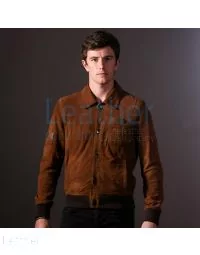
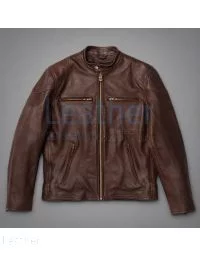
A note on riding: suede is generally not chosen for motorcycle crash protection compared with thick smooth cowhide made and tested for riding. If you ride, look for gear built for it, with protective standards, rather than relying on a fashion jacket. Our men's leather coats and custom leather jackets show smooth leather options, and finishes available vary by style. For suede, see the John Lennon Rubber Soul jacket in brown suede.
Can you have both?
Some garments combine finishes: a smooth leather body with suede collar, panels or lining, or a suede jacket with smooth leather trim at cuffs and pocket edges. The smooth parts take the wear and the suede adds texture. The trade-off is care, because you are now looking after two surfaces, and a product made for suede can mark the smooth parts. Clean each area with the right method, keep protector off the smooth sections unless the label says it is safe, and test in a hidden spot before treating anything.
If you want a particular mix of leathers in a jacket, ask the maker what can be specified and how the combination will behave over time.
Common problems and what to do
| Problem | Suede | Smooth leather |
|---|---|---|
| Rain spots | Let dry naturally, brush the nap; ring may remain | Blot, dry slowly, condition if it feels dry |
| Grease or oil mark | Blot, then take it to a suede specialist; old marks need a professional | Blot, then wipe lightly; test any cleaner first |
| Scuffs | Suede eraser and brush | Often blend with a little conditioner |
| Shiny patches | Brush and eraser to lift the nap | Part of normal wear |
| Salt marks | Brush when dry; specialist if stained | Wipe with a damp cloth |
Buying tips for each finish
- Suede. Look for an even nap with no bald or shiny patches, consistent color across panels and a protector recommendation from the maker. Run a hand across the surface: the nap should look different when brushed in different directions, but not shed.
- Smooth leather. Check the grain for an even finish, firm stitching and a lining that fits the cut. A very uniform, plasticky surface may be a heavily corrected grain; our guide to full-grain vs top-grain leather explains how to read that.
- Either. Ask for the care instructions, and check how the color holds up against light and rubbing.
Care for each
Suede
Brush the nap gently, keep it dry and use a protector made for suede. Blot spills without rubbing, let wet suede dry naturally and take heavy stains to a specialist. Never use smooth-leather creams on it. Our full routine is in how to clean a suede jacket at home.
Smooth leather
Wipe with a soft, barely damp cloth, condition lightly when it feels dry and dry it away from heat after rain. The finish decides which products are safe, so test first. See how to clean a leather jacket.
A caution on dressings
Conservation guidance written for museum collections, such as the US National Park Service's Conserve O Gram on leather dressings, notes that dressings have no preservative effect and that frequent use has caused darkening and embrittlement. That guidance is written for heritage objects, not worn clothing, but it is a good reason to follow the maker's advice rather than conditioning on a fixed schedule.
FAQs
Is suede warmer than leather?
It feels warmer and softer, but real warmth comes mostly from the lining and the thickness. Smooth leather blocks wind very well.
Is suede or leather more durable?
Smooth leather is generally more durable against weather and stains. Suede wears at the nap and marks easily. Quality and thickness matter more than the finish.
Can you wear a suede jacket in the rain?
Only briefly, and it is best avoided. Water leaves marks and flattens the nap. A protector helps a little but does not make suede waterproof.
Is suede real leather?
Yes. It is real leather with a brushed, napped surface, made from the underside of a hide or a split.
Which is easier to clean, suede or leather?
Smooth leather is usually easier, since it can often be wiped. Suede needs dry cleaning methods and specialist help for heavy stains.
Does suede last as long as leather?
It can last many years with good care, but it shows wear sooner and tolerates less abuse than smooth leather of the same quality.
To compare finishes in real garments, browse our men's leather coats or order a custom leather jacket in the leather you prefer.