
 Canada
 Brazil
 Germany
 France
 Italy
 Switzerland
 Sweden
 Spain
 Great Britain
 Norway
 Russia
 South Africa
 Japan
 New Zealand
 Australia

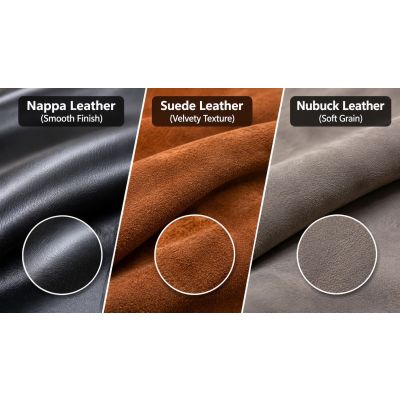
Short answer: nappa is a soft, smooth leather, typically from lamb, sheep, goat or calf, tanned and finished to feel supple. It is a feel and finish term, not a species or a grade or a protection rating. Nappa drapes well and feels luxurious, but it scratches and wears faster than thick cowhide, so it suits fashion jackets, blazers and gloves better than motorcycle protective use.
What nappa leather means
"Nappa" describes how leather feels and looks: soft, smooth and buttery, with a fine grain. It is not a single material. The word is used by different tanners and sellers in slightly different ways, so definitions vary. Most nappa is full-grain or top-grain, made from the hides of young or lightweight animals such as lambs, sheep, goats or calves, which are naturally thinner and finer. Our brown quilted biker jacket, for example, is cut from nappa sheepskin, 0.8-0.9 mm.
That matters for buyers. A product called "nappa" tells you it should feel soft. It does not tell you how thick it is, what animal it comes from, how it was finished or how it will hold up. For those, read the description or ask.
How nappa is made and why it is soft
Several choices combine to give nappa its feel.
- The hide. Thin, fine-fibered skins are softer to begin with.
- The tanning. Tanning methods that leave the fibers loose and well lubricated, usually with oils added in the drum, produce a supple leather.
- The finish. Nappa is often aniline or semi-aniline, meaning a transparent dye or a thin coat, so the natural grain remains visible and the surface stays soft. A thick pigment coat makes leather firmer.
- Thickness. Nappa is usually thinner than the leather in a riding jacket.
Nappa vs full-grain vs suede vs nubuck
| Type | Feel | Scratch resistance | Water | Care | Best use |
|---|---|---|---|---|---|
| Nappa | Very soft, smooth | Lower; scratches and scuffs show | Marks easily if untreated | Gentle cleaning, light conditioner | Fashion jackets, blazers, gloves |
| Full-grain (thick) | Firm, natural | Higher; scratches blend in and age | Better if finished | Moderate | Jackets and bags for long wear |
| Suede | Velvety, napped | Scuffs and flattens | Stains and soaks readily | Brush; dry methods | Casual jackets |
| Nubuck | Fine velvet nap on the grain side | Moderate | Marks easily | Brush; specialist protector | Casual and dress wear |
Our guide to full-grain vs top-grain leather explains the grain layers underneath these finishes, and different types of leather covers the animals.
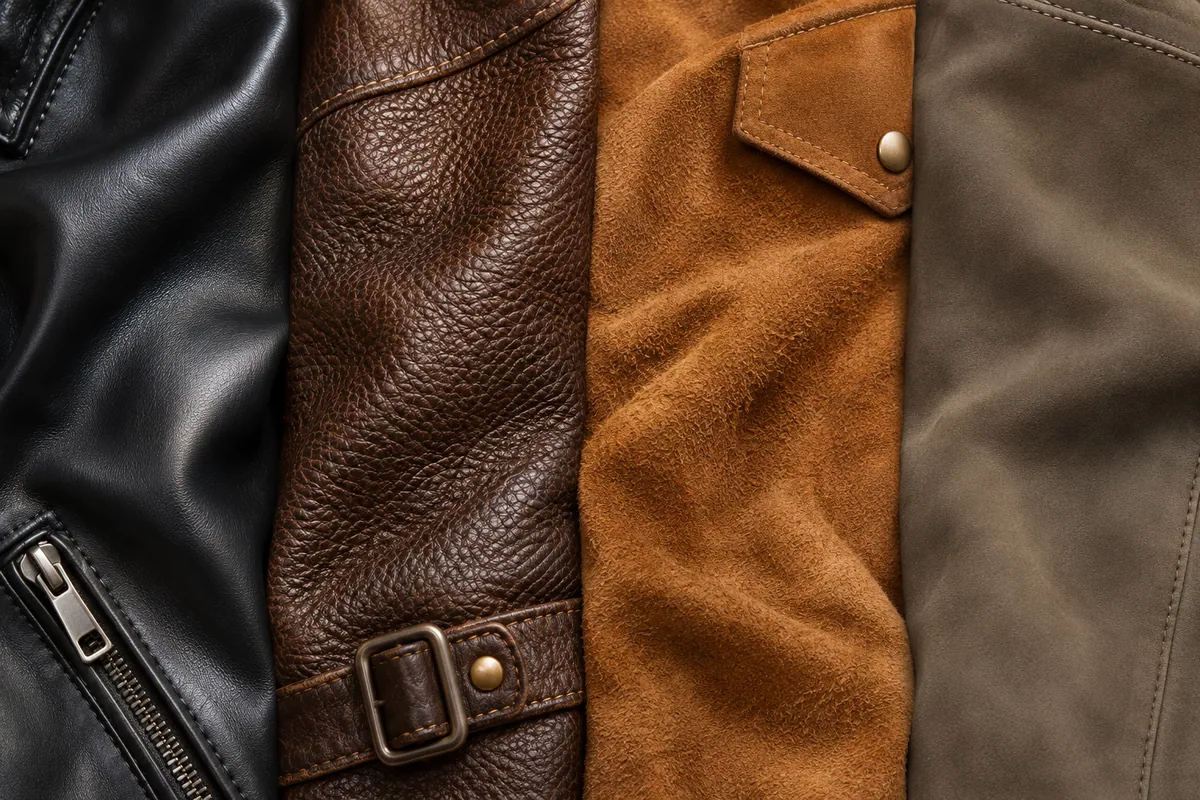
Where nappa shines and where it does not
Nappa is the choice when drape and comfort matter most. It makes clothing that moves and feels light, such as tailored jackets, blazers, dresses and gloves. You can browse tailored examples in our men's leather blazers and women's leather clothing.
Do not confuse softness with protection. Nappa is a feel and finish term. It is not a protection rating. A soft nappa jacket is not a substitute for thick cowhide made for riding, which resists abrasion through thickness and construction. If you ride, choose gear built for it and look for protective standards. For riding jackets see our custom leather jackets and the options listed on those pages.
Caring for nappa
- Wipe gently. A soft, barely damp cloth removes light dirt.
- Use a mild leather cleaner sparingly if needed, tested on a hidden spot.
- Condition lightly. Heavy oil darkens and can over-soften this leather.
- Treat scuffs gently. Warm light pressure with a clean finger or soft cloth can blend minor surface marks, and a little matching conditioner can help. Deeper scratches need a specialist.
- Protect from water and sun. Water spots and fading are easier on thin, finely finished leather.
For routine care read how to care for leather gear.
What to ask before you buy a nappa piece
- Which animal and layer? Lamb, goat and calf behave differently, and a full-grain nappa is a better base than a coated split.
- How thick is it? Thin leather drapes well but marks easily. A medium weight gives structure to a blazer or coat.
- What is the finish? Aniline and semi-aniline feel softer; a heavier coat is more stain-resistant and firmer.
- What is the lining and construction? A soft hide needs good stitching and a lining that supports the shape, especially at the shoulders and elbows.
- What care does the maker advise? Keep the instructions that arrive with the garment.
Styling and occasions
Nappa suits clean, modern lines. A fitted nappa blazer works with tailored trousers or jeans, a soft jacket suits spring and autumn, and gloves and bags in nappa dress up a plain coat. It reads as polished more than rugged, so for a heavy-duty biker look many people turn to thicker cowhide. Suede and nubuck read as more casual and textured, which makes them popular for weekend wear and layered looks. Our seasonal leather styling guide has ideas for different times of year.
Is nappa worth it?
It is if you want softness and a refined look. Before buying, ask about thickness, the hide, the finish and the lining. A well-made nappa piece has even color, firm stitching and a lining that suits it. A very cheap "nappa" piece may be a thin split with a coating. Compare it with how you will wear it: a dressy jacket worn gently ages well; a jacket worn hard every day may scuff sooner than thicker leather would.
Suede and nubuck: the napped finishes
These are the finishes people most often compare nappa with. Both have a velvety surface, and both need different care from smooth leather.
Suede
Suede is made from the underside of the hide or from a split, brushed to a soft nap. It looks casual and feels very soft, and it suits fashion pieces, vintage styles, skirts, vests and biker-inspired jackets where the look matters more than rugged wear. The same fibers that give it its texture absorb moisture, dust and dirt, so it stains and shows wear sooner than smooth leather. Brush it regularly, protect it with a spray made for suede, let it dry naturally if it gets wet, and expect to take heavy stains to a specialist. See our guide to suede vs smooth leather and our step-by-step on cleaning a suede jacket.
Nubuck
Nubuck is grain-side leather that has been sanded or buffed to a fine nap. Because the grain structure sits underneath, it is generally a little tougher than suede, and it works as a middle ground between smooth nappa and delicate suede. It still stains and marks more easily than nappa, so it needs similar care to suede: a soft brush, a protector made for it and a dry-first approach to cleaning.
Which finish should you choose?
| Choose | If you |
|---|---|
| Nappa | Want a smooth, polished, comfortable leather that breaks in quickly and needs only light care |
| Suede | Want a distinctive soft look, live in a mostly dry climate and do not mind regular brushing |
| Nubuck | Like the suede look but want something a little tougher for casual daily wear |
| Thick full-grain cowhide | Need long wear, riding use or a jacket that will take scratches and age |
None of these finishes is "best". The right one depends on your climate, how often you will wear it and how much upkeep you accept. Ask the maker about the thickness and the finish of the actual piece, since two garments sold under the same name can behave quite differently.
FAQs
Is nappa leather real leather?
Yes. It is real leather, usually from lamb, sheep, goat or calf, finished to be soft and smooth. The term describes feel and finish.
Is nappa leather good quality?
It can be. It is usually soft and refined, but quality depends on the hide, the tanning, the thickness and the finish, not the word itself.
What is the difference between nappa and full-grain leather?
Full-grain describes the layer of the hide used. Nappa describes the feel and finish. Nappa can be full-grain, and often is, but not always.
Is nappa leather durable?
It is durable enough for normal fashion wear, but it scratches and wears sooner than thick cowhide, so it is a poor choice for hard use or riding protection.
Is nappa the same as lambskin?
No. Lambskin is a source. Nappa is a finish and feel. Much nappa is lambskin, but not all lambskin is nappa.
How do you clean nappa leather?
Wipe it gently with a soft, barely damp cloth, use a mild leather cleaner sparingly, test on a hidden spot first and condition lightly. Avoid heavy oils and soaking.
To see soft leather finishes in finished clothing, browse our men's leather blazers and women's leather clothing.