
 Canada
 Brazil
 Germany
 France
 Italy
 Switzerland
 Sweden
 Spain
 Great Britain
 Norway
 Russia
 South Africa
 Japan
 New Zealand
 Australia

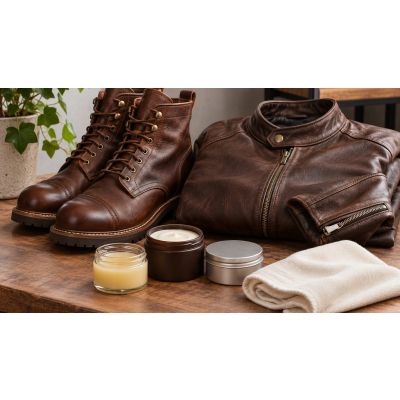
Short answer: use a leather conditioner for routine care of jackets and vests, mink oil when you want boots or work leather to shed water and you accept some darkening, and neatsfoot oil only when leather is dry and stiff and you are happy for it to get softer, darker and a little looser. Race suits and kangaroo leather need the lightest touch of all, so skip heavy oils on them unless the maker says otherwise.
All three products put fats or oils back into leather. The differences are how heavy they are, how deep they go and what they leave behind. Those differences decide whether your jacket stays the color you bought, whether your boots stretch a half size, and whether a race suit keeps the snug, controlled fit it was cut for.
Quick comparison: mink oil, neatsfoot oil and conditioner
| Product | Darkening | Softening | Stretch risk | Water resistance | Best for | Main risk |
|---|---|---|---|---|---|---|
| Leather conditioner (cream or lotion) | Slight to none | Gentle | Low | Little or none | Jackets, vests, pants, gloves in regular use | Build-up if applied too often |
| Mink oil or mink-oil paste | Noticeable on most leathers | Moderate | Low to moderate | Some, from the waxy or fatty film | Work boots, riding boots, thick cowhide | Greasy surface, dark patches, softened leather |
| Neatsfoot oil | Noticeable to strong | Deep | Moderate to high | Little | Dry, stiff cowhide such as old boots or saddles | Over-softening, loose fit |
Read the table as a direction of travel, not a measurement. Brands vary a lot. Many products sold as "mink oil" are blends, and neatsfoot oil comes in a pure form and a "compound" form that is cut with other oils. The label is the only reliable guide to what is in your tin. Manufacturers publish technical data sheets for their products, and those are better evidence than any forum rule of thumb.
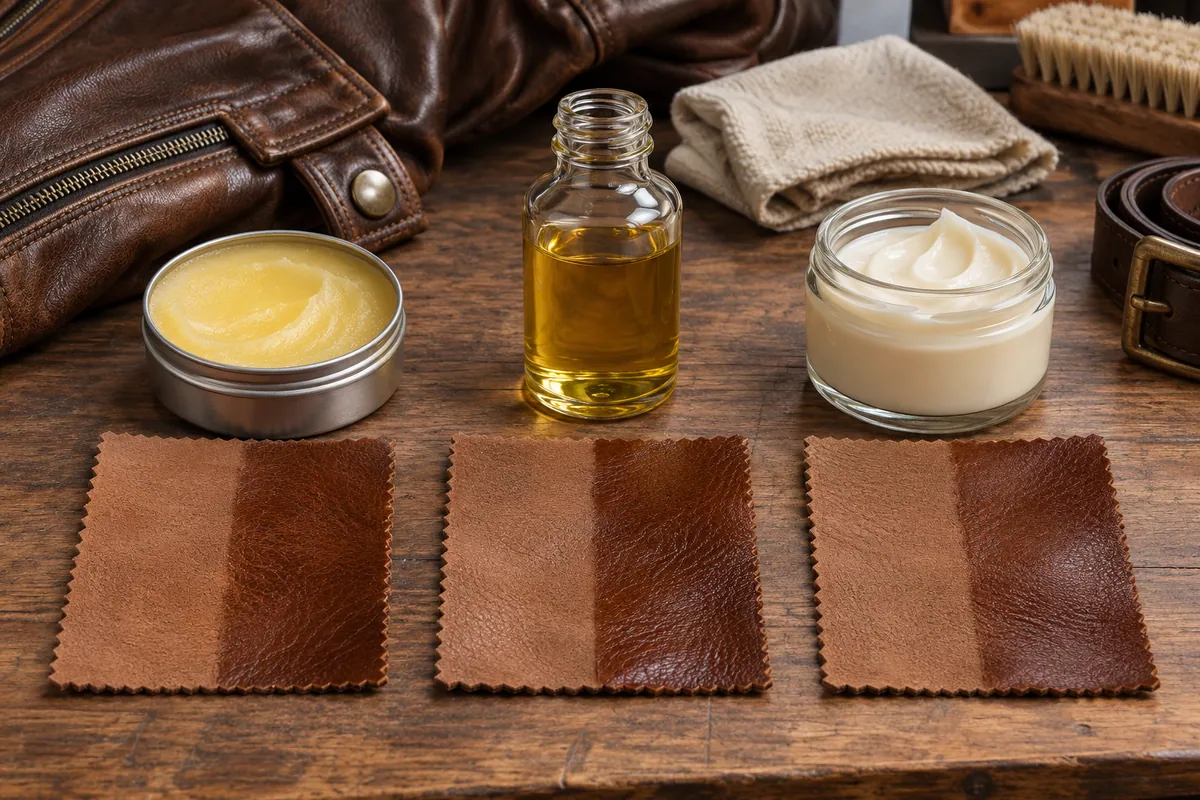
Mink oil: water resistance at a price
Mink oil was traditionally rendered from mink fat. Today a lot of products sold under that name are blends, so check the label if the source matters to you. It is thick, it soaks in slowly and it leaves a film. That film is why people use it on boots: it helps leather shed water for a while and keeps seams from drying out.
It also darkens most leather, sometimes unevenly, and it can leave a tacky or greasy surface that collects dirt. On a boot that lives in mud, that trade is fine. On a jacket you wear next to a shirt, or on pale leather, it is rarely worth it.
Use it on boots and thick cowhide that need weather resistance more than looks. If you ride in wet weather, a pair of custom motorcycle boots still needs the right leather and construction first; oil is maintenance, not a substitute. Avoid it on suede, nubuck, perforated panels and light colors.
Neatsfoot oil: deep softening, with side effects
Neatsfoot oil is made from the rendered shin bones and feet of cattle. It penetrates deeply, which is why it is a classic choice for saddles, baseball gloves and old, dry boots. It is also the product most likely to change the leather permanently.
Expect three things. The leather will darken, often a full shade. It will get softer and more pliable. And it can stretch, because oiled fibers slide more easily. That is useful when you want a stiff boot to give, and a problem when the item was fitted closely.
If you try it, use pure neatsfoot oil rather than a compound unless you want the extra ingredients, apply one thin coat and wait. More oil is easy to add and impossible to take out.
Leather conditioner: the everyday option
Conditioners are usually emulsions: lighter oils and waxes blended with water and other ingredients so they spread thinly. They are made for regular maintenance. They replace some of the moisture and oils leather loses with age, sun and cleaning, and they usually change color and stretch far less than straight oil.
For a jacket or vest this is the sensible default. Clean first, apply a small amount with a soft cloth, let it absorb, then buff off the excess. Our step-by-step guide to cleaning and conditioning a leather jacket at home covers the routine, and the broader leather gear care guide shows how conditioning fits with cleaning and storage.
Conditioner is not magic. Leather that is already well kept needs very little. Applying it every few weeks "just in case" is the most common way people end up with a sticky, over-softened jacket.
By leather type: cowhide, lambskin and kangaroo
| Leather | How it handles oils | What to use |
|---|---|---|
| Thick cowhide | Tolerates the most. Absorbs oil slowly and shows darkening clearly. | Conditioner for routine care; mink oil or neatsfoot only on boots or very dry leather |
| Lambskin and other soft skins | Already supple and thin. Soaks up oil quickly and can look blotchy or limp. | Light conditioner in small amounts; avoid straight oils |
| Kangaroo | Thin and fine-fibered, so it can take up oil fast. Use very little. | Sparing use of a light conditioner, tested on a hidden spot first |
| Suede and nubuck | Oils flatten the nap and stain. | No oils or creams; use products made for napped leather |
If you are weighing hides for a suit or jacket, our comparison of cowhide vs kangaroo leather for race suits explains how the two behave and why that matters for care.
By item: jackets, boots and race suits
Jackets and vests
Conditioner, lightly. A jacket has a lining, a collar that touches skin and often pale piping or contrast panels. Heavy oil will darken the shell, may transfer to clothing and can stain light linings.
Boots
Boots take the most abuse and tolerate the most product. Mink oil or paste suits a work or touring boot. Neatsfoot oil suits a dry, stiff pair, but watch the fit: oiled boots can loosen around the ankle and instep. Keep oil off soles, off any bonded or glued seams you are unsure about, and off technical membranes.
Race suits
This is where over-oiling does the most harm. A race suit is cut close, with stretch panels, perforation, lining and armor pockets, and it relies on a controlled fit. Heavy oil can soften and slacken the leather, clog perforation and stain the lining. If a suit needs care, start with the maker's instructions and our guide to cleaning a motorcycle race suit.
Over-oiling: signs and what to do
You have used too much if the leather feels greasy long after application, looks dark and patchy, feels limp or loose, leaves marks on clothing or attracts dust and dirt.
- Stop applying anything and let the item rest somewhere cool and ventilated, away from heat.
- Wipe the surface with a clean, dry cloth to lift excess.
- Do not use solvents, hair dryers or radiators to "draw out" the oil. Heat can damage leather and may push oil deeper.
- If the item is a valued jacket or suit, ask a professional leather cleaner or the maker before trying anything stronger.
Oil that has gone through to the stitching and the lining is the hardest to fix, which is another reason to start light.
How to apply any of them
- Clean first. Oil sealed over dirt traps it.
- Test a hidden spot. The inside of a hem or a pocket flap will do. Wait a day to see the final color.
- Use a thin coat. A pea-sized amount on a soft cloth covers a surprising area.
- Work in, then wait. Give the leather several hours to absorb, longer for oils.
- Buff. Remove any residue with a clean cloth.
- Re-assess before a second coat. Judge softness and color after the leather has settled.
For general upkeep habits beyond products, see our leather care tips. We do not recommend specific brands here; use products that state the leather types they suit and follow the manufacturer's instructions.
FAQs
Should I use mink oil or neatsfoot oil?
Mink oil if you want some water resistance on boots or thick cowhide. Neatsfoot oil if the leather is dry and stiff and you want it softer. Both darken leather, so test first. For a jacket, a conditioner is usually the better choice.
Does oil darken leather?
Almost always, to some degree. Neatsfoot oil and mink oil darken more than a light conditioner. Pale and tan leathers show the change most. A hidden-spot test shows the result before you commit.
Can I use oil on kangaroo leather?
Be cautious. Kangaroo is thin and fine-grained, so it can take in oil quickly. If you use anything, make it a light conditioner in a small amount, tested on a hidden spot first, and check the care instructions that came with the garment.
How often should I condition leather gear?
Only when it looks or feels dry, not on a calendar. For many jackets that is once or twice a year with normal wear, but climate, use and leather type change the answer.
Can I put oil on a race suit?
Generally avoid it. Race suits depend on a close, controlled fit, and heavy oil can slacken leather, block perforation and stain linings. Follow the maker's care instructions.
Will neatsfoot oil stretch my boots?
It can. Oil lets the fibers move more freely, so boots may loosen a little around the foot. Some people use that on purpose to ease a tight pair, but it is hard to reverse, so go slowly.
Looking after leather you already own is the cheapest way to make it last. When a pair of boots is finally beyond care, our custom motorcycle boots are built to your measurements.