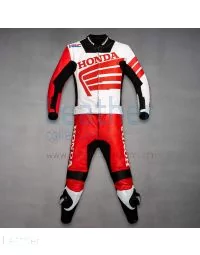
 Canada
  Brazil
  Germany
  France
  Italy
Italy  Switzerland
  Sweden
  Spain
Spain  Great Britain
  Norway
  Russia
  South Africa
  Japan
Japan  New Zealand
  Australia
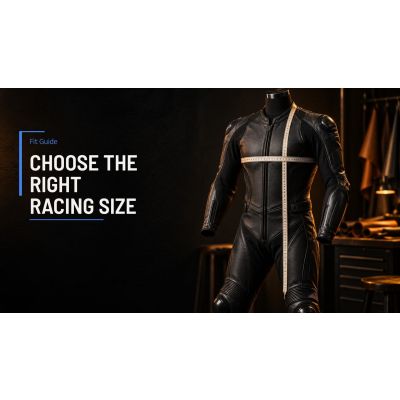
Choosing a racing suit size is harder than it looks. Unlike casual clothing, a motorcycle suit works only when it is close to the body, so a roomy fit is a risk rather than a comfort. This guide covers how a suit should fit, how to measure, and what to watch for when sizes fall between charts.
Key Takeaways
- A race suit should fit like a second skin; a loose suit lets protectors move away from the joints.
- Size charts differ between makers, so compare measurements, not size numbers.
- Measure chest, waist, hips, inseam and torso loop, wearing the base layer used under the suit.
- Riders whose measurements keep falling between sizes should look at custom sizing.
Why Fit Comes Before Size
A is designed to hold abrasion-resistant leather and impact protectors close to the body. If the suit is too large, material can bunch during a slide, and knee and elbow protectors can rotate away from the joint they are meant to cover. The aim is a snug, second-skin fit, not the size that feels easiest to put on.
Why Size Charts Disagree
Most makers use European sizing (for example EU 52) or US sizing (for example US 42), but charts are not universal. A size 50 from one maker can fit very differently from another because of:
- Chest-to-waist ratio: some cuts are athletic and V-shaped, others leave more room in the midsection.
- Inseam length: short, standard and tall versions of the same size can differ considerably.
- Torso height: often the most important measurement in a one-piece suit; a short torso pulls at the shoulders and crotch.
How to Measure for a Racing Suit
Use a soft measuring tape and ask a friend to help, since measuring yourself tends to introduce errors. The key measurements are:
- Chest: around the fullest part of the chest, with the tape under the arms.
- Waist: around the natural waistline, usually just above the navel.
- Hips: around the widest part of the hips and seat.
- Inseam: from the crotch to the ankle bone. Race suit legs are cut shorter than jeans so they do not bunch inside the boots.
- Torso loop: from the collarbone, down through the crotch and back up to the start. This measurement matters most for a one-piece suit.
Wear the thin base layer you intend to use on track while measuring, and allow for a standalone back protector if you plan to wear one. EN 1621-2 specifies two performance levels for back protectors (SATRA). If your weight is changing, factor that in as well.
Common Sizing Mistakes
Sizing Up for Comfort
A new suit should feel slightly restrictive when first put on. Leather gives a little with wear, so a suit that feels roomy straight out of the box is likely to be loose after a few sessions. If you are comparing formats, and list different cuts.
Ignoring Proportions
A size is only a starting point. A rider with a large chest and short legs, or long arms and a short torso, can find that no single size fits everywhere. Compare the measurements for each part of the body instead of relying on one number. and are examples of listings where the sizing details can be checked against your own measurements.
When Custom Sizing Makes Sense
If your measurements consistently land between sizes, standard off-the-rack sizing may never fit well enough for protectors to stay aligned. In that case a custom-made suit is the logical step, because it is cut from your own measurements. Measure carefully and follow the maker's instructions exactly. The right size is the specific geometry that keeps the armor over the joints, not a number on a tag.
Frequently Asked Questions
What size racing suit do I need?
Measure chest, waist, hips, inseam and torso loop with a soft tape while wearing the base layer used under the suit, then compare each number with the maker's size chart. Charts differ between makers, so a size 50 in one brand may not match a 50 in another. Choose the size that fits snugly across all measurements.
Should a racing suit feel tight?
Yes, within reason. A new suit should feel slightly restrictive, because leather gives a little with wear and a roomy suit lets protectors drift away from the joints. It should still allow gripping the bars, bending the elbows and knees and moving on the seat. Pulling at the shoulders or crotch suggests the torso is too short.
What if my measurements fall between sizes?
Ask the maker which size suits your base layer and riding position, and compare each measurement rather than the size label. If chest, torso, arms and legs keep pointing to different sizes, a custom-made suit cut from your own measurements is the more reliable option.
Do I need to allow for a back protector?
If you plan to wear a standalone back protector under the suit, allow for its thickness when checking the chest fit. Back protectors are tested to EN 1621-2, so look for that standard. Try the suit on with the protector and the base layer together before deciding on a size.
Written by the Leather Collection Editorial Team.