 Canada
  Brazil
  Germany
  France
  Italy
Italy  Switzerland
  Sweden
  Spain
Spain  Great Britain
  Norway
  Russia
  South Africa
  Japan
Japan  New Zealand
  Australia
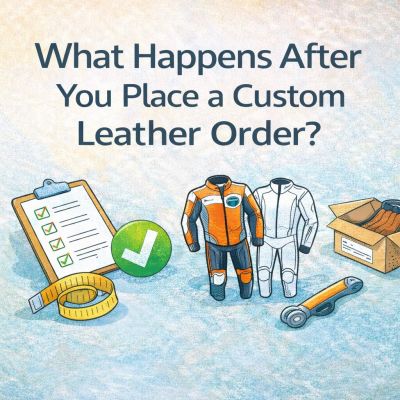
Custom gear feels personal, so it is natural to ask what actually happens after a custom leather order is placed. The made-to-measure order process is not instant. It follows a sequence of checks and handwork steps, and each one exists so the garment fits, wears well and sits correctly over any protectors.
Key Takeaways
- A custom order starts with a review of the product, options and measurements before anything is cut.
- Pattern making turns the measurements into a template, and the leather is cut from that template.
- Stitching, armor pockets and hardware are assembled and inspected before the garment is packed.
- Steps and order can vary by garment, from a motorcycle jacket to a coat or a race suit.
Contents
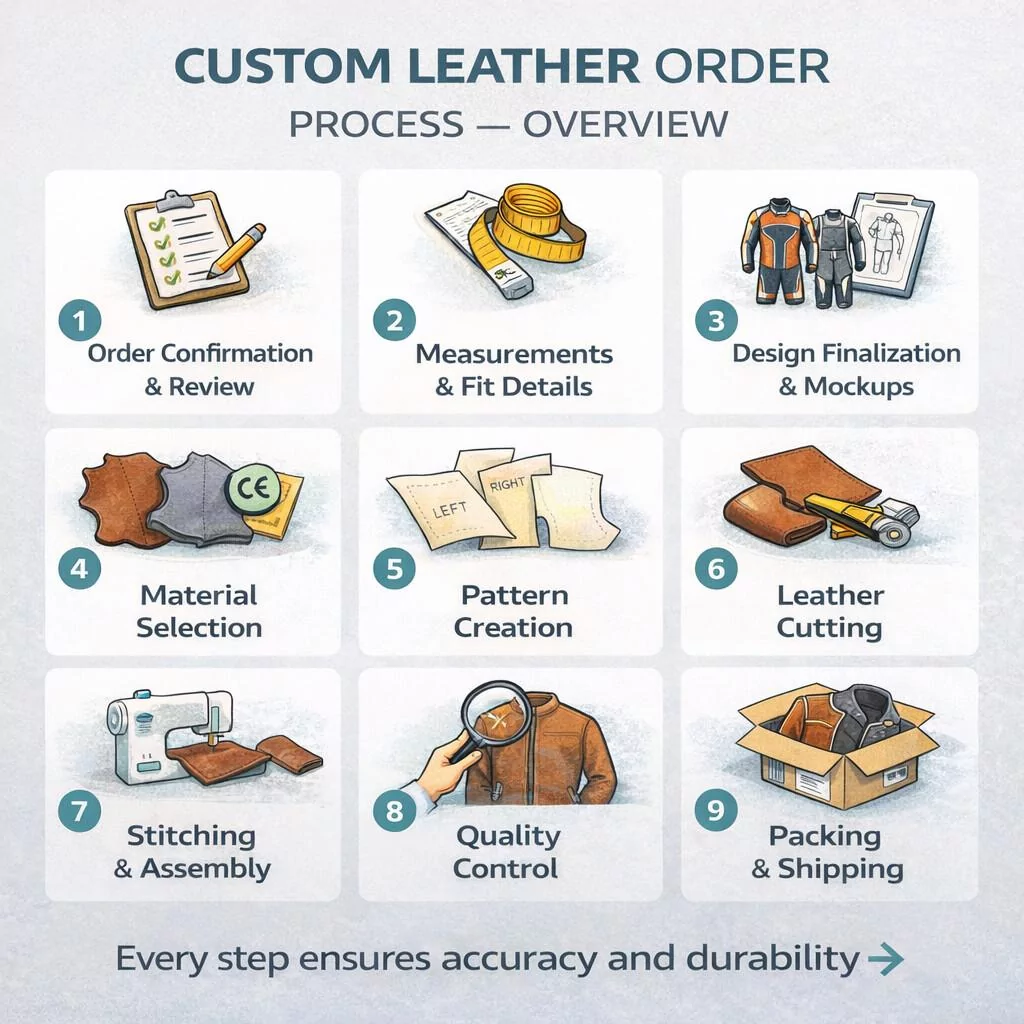
Step 1: Order Confirmation & Review
Steps vary by garment. Once the order is placed, it is reviewed against what was chosen. The review covers:
- Product selection
- Customization options
- Standard size or made-to-measure choice
- Special requests or notes
If anything is unclear, it is raised before work moves forward, because a question answered early prevents a mistake later.
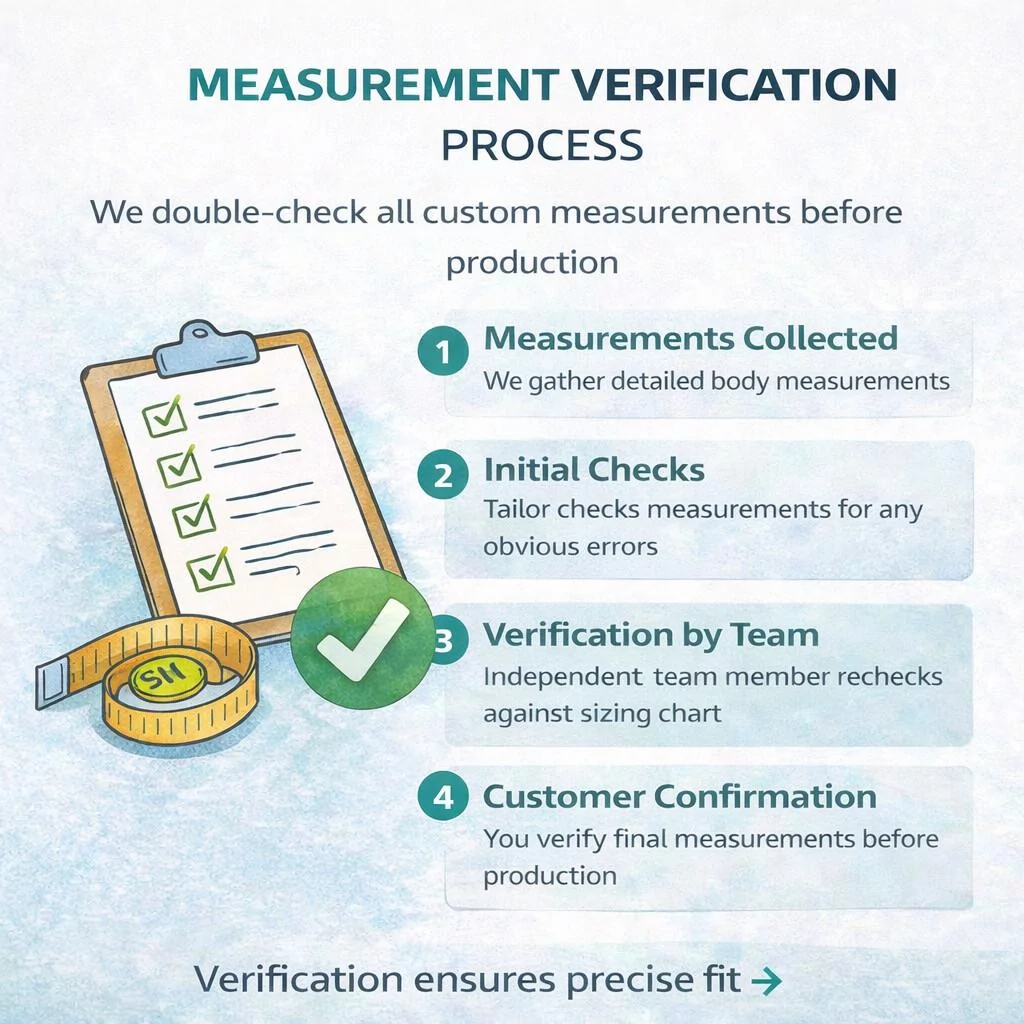
Step 2: Measurements & Fit Details
For made-to-order leather, fit drives everything else. With standard sizing, height and weight are reviewed against the size chart. With made-to-measure, a full set of body measurements is requested, typically chest, waist, hips, shoulders, sleeve length and back length for a jacket.
Why This Step Matters
- It helps armor sit over the joints it is meant to cover
- It avoids tight or loose areas
- It improves comfort and movement
Measurements are worth taking carefully, because the pattern in step 5 is built from them. Options such as depend on accurate numbers.
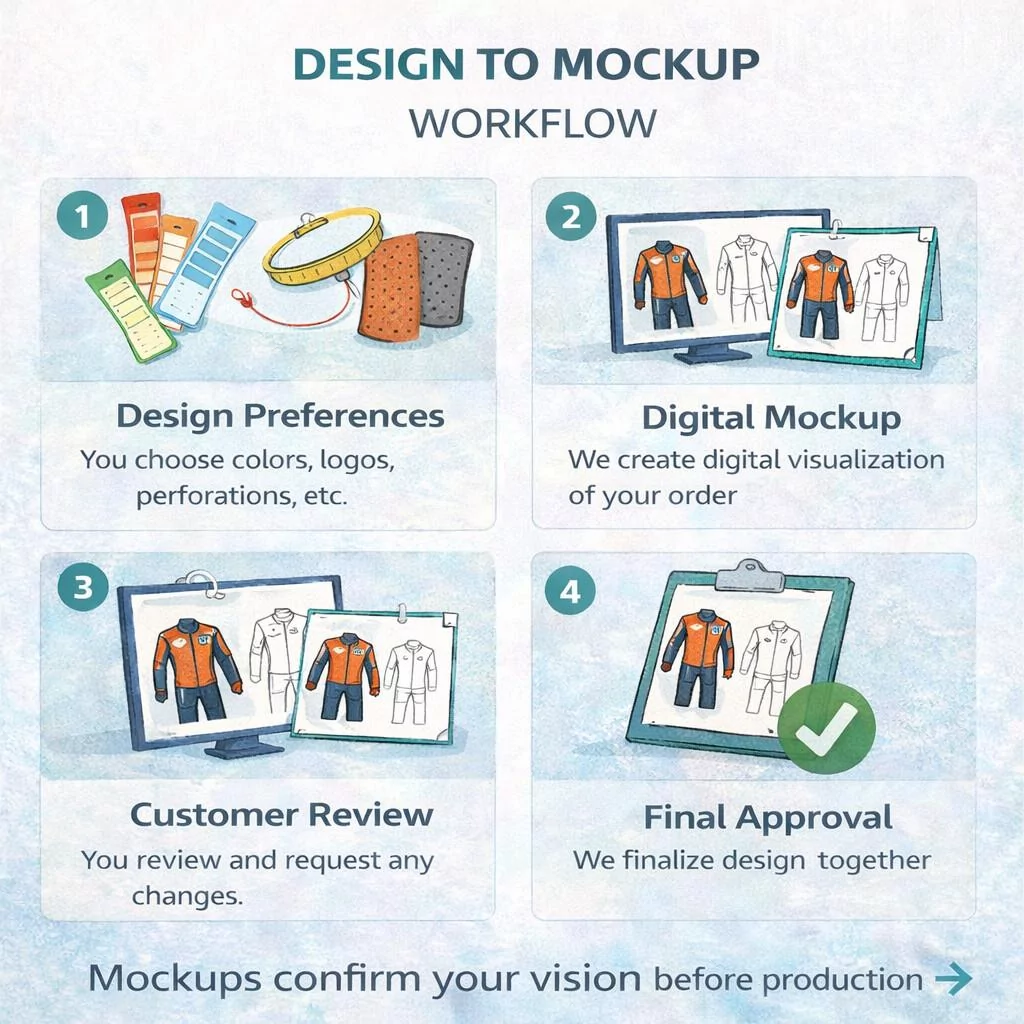
Step 3: Design Finalization & Mockups
Once measurements are confirmed, the design details are settled. These usually include:
- Color placement
- Logos or embroidery
- Panel layout
- Perforation zones
For complex designs, a digital mockup may be shared for approval. Settling the design on paper first means the finished piece matches what was intended.
Step 4: Material Selection
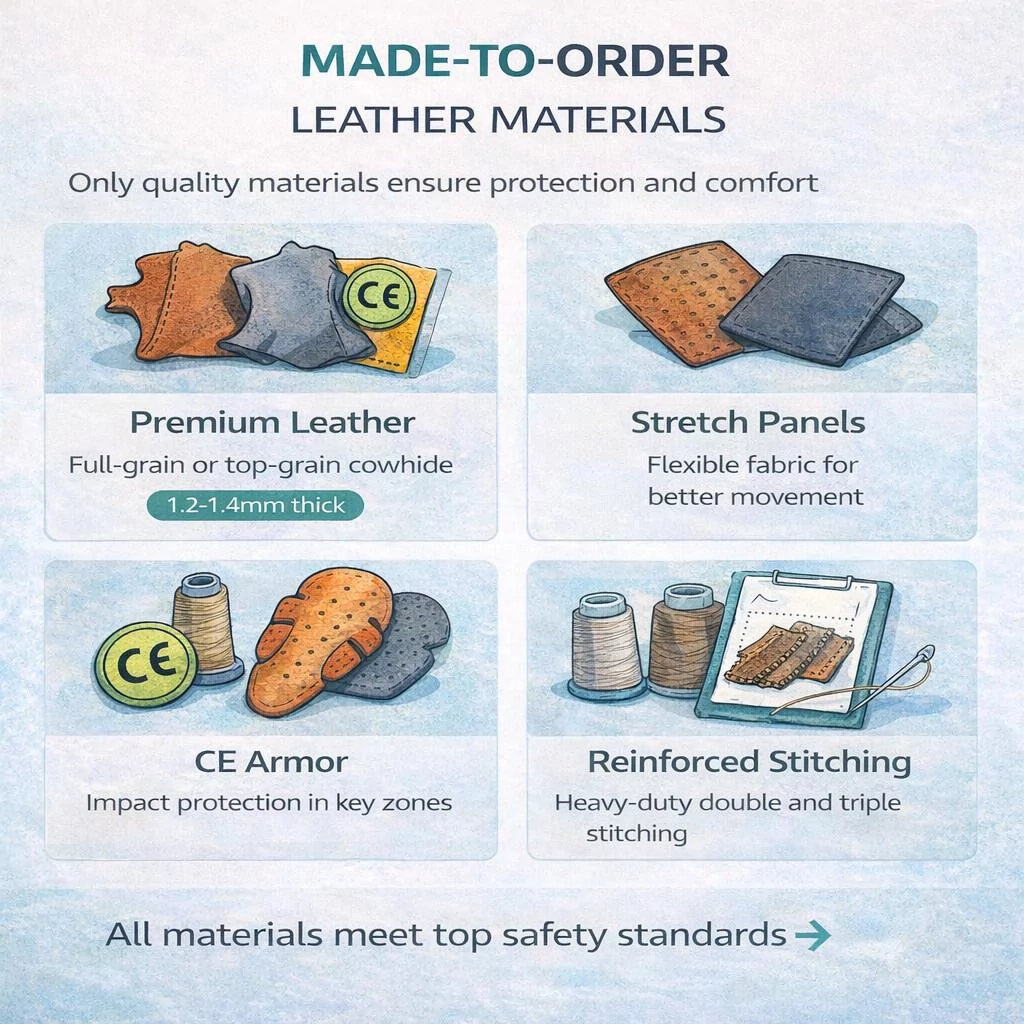
The next stage is choosing the materials for the order. Depending on the garment, this can include:
- Full-grain or top-grain leather
- Stretch panels
- Armor tested to EN 1621, where the garment includes it
- Thread, linings and reinforcements
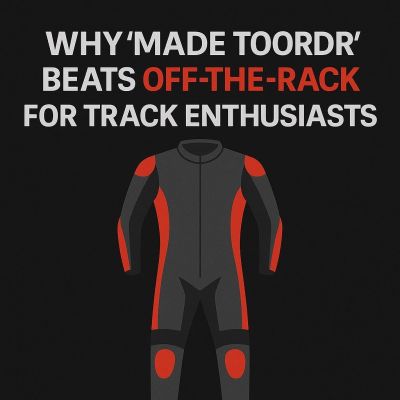
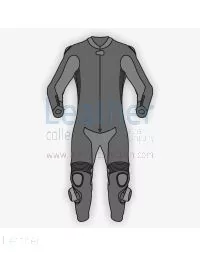
For armor, EN 1621-1 is the standard for shoulder, elbow, hip and knee protectors, as described by Wikipedia. The leather itself is chosen for its thickness and flexibility to suit the garment, whether a fitted jacket or a racing suit such as the .
Step 5: Pattern Creation
This is where a custom order starts to differ from standard sizing. The measurements are used to draw a pattern for that order, rather than relying only on a standard size template.
What a Pattern Does
- Matches the garment to the wearer’s body shape
- Allows for riding posture where relevant
- Balances tension across the panels
Once the pattern is finalized, it moves on to cutting.
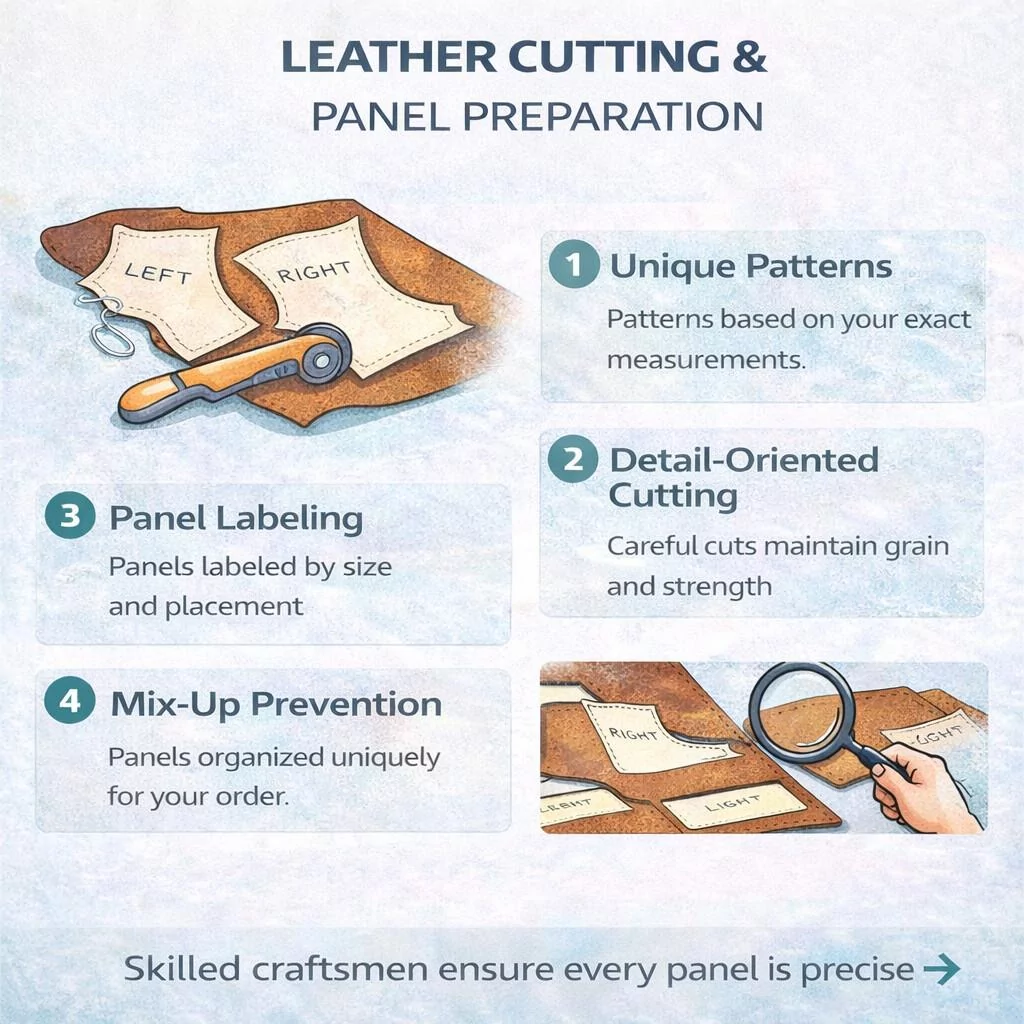
Step 6: Leather Cutting
Leather is a natural material, so each hide varies. Panels are cut from the pattern with the direction of stretch and any marks in the hide taken into account.
Panels are labeled and grouped by order, which keeps the pieces for one garment together through the later steps.
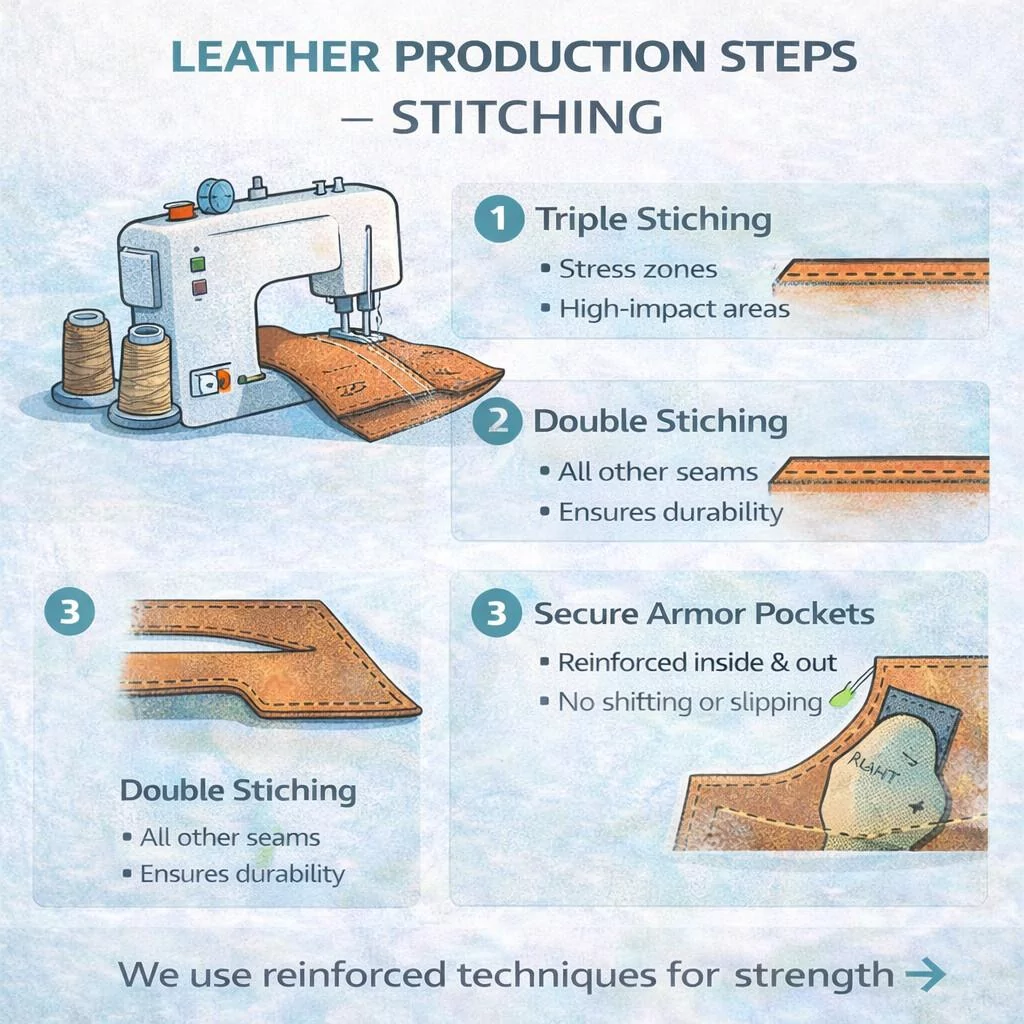
Step 7: Stitching & Assembly
Stitching is usually the most time-intensive stage. The panels are sewn together, with extra reinforcement where the garment is under load. For protective garments, the pockets that hold armor are built in at this stage.
- Panels are joined with reinforced seams
- Armor pockets are secured
- Stretch panels and liners are added
Seams are checked as the garment takes shape, before it moves on.
Step 8: Quality Control
Before packing, the finished garment is inspected.
What Is Checked
- Measurements against the order specification
- Stitching
- Zippers, closures and finish
Step 9: Packing & Shipping
Once the garment is approved, it is packed so it arrives in good condition.
- Folding that avoids creases
- Protective packaging
- Accurate shipping labels
After this step, the custom leather piece is on its way. Other made-to-measure options include .
Conclusion: Custom Work Takes Time
The is detailed because each stage depends on the one before it. Accurate measurements lead to an accurate pattern, which leads to clean cutting, stitching and a garment that fits as intended.
Frequently Asked Questions
What measurements are needed for a made-to-measure leather jacket?
A jacket typically needs chest, waist, hip, shoulder width, sleeve length and back length, and sometimes neck and armhole measurements. For protective garments, torso length and arm length also help the armor sit over the joints. Always follow the specific measuring guide given for the garment, because required measurements vary.
What is a pattern in leather garment making?
A pattern is the template that defines the shape and size of each panel of a garment. In made-to-measure work it is drawn or adjusted from the customer’s own measurements. The leather is then cut from that template, so the accuracy of the pattern strongly affects how the finished garment fits.
What does EN 1621-1 mean for armor in a leather jacket?
EN 1621-1 is the standard for shoulder, elbow, hip and knee protectors and tests how much impact force a protector transmits. Level 1 requires a mean below 35 kN with no single value over 50 kN; Level 2 requires a mean below 20 kN. The standard describes test results only.
Written by the Leather Collection Editorial Team.