 Canada
  Brazil
  Germany
  France
  Italy
Italy  Switzerland
  Sweden
  Spain
Spain  Great Britain
  Norway
  Russia
  South Africa
  Japan
Japan  New Zealand
  Australia
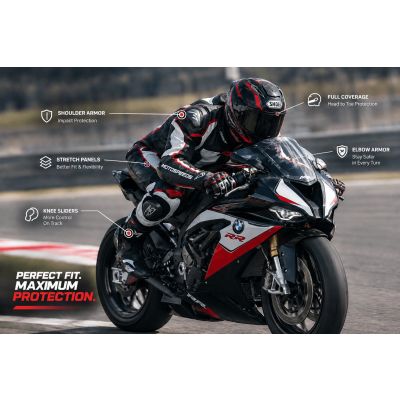
Choosing the right motorcycle racing suit is one of the most critical decisions you'll make as a rider, yet many buyers focus on style over substance. When you're ready to prepare a motorcycle racing suit for your needs, you need to understand how fit, armor placement, construction, and riding style work together. A poor fit can affect comfort and armor placement, making even well-made gear less effective. This guide walks you through what matters before ordering, which features to check, and how to avoid common buying mistakes that lead to uncomfortable or unsuitable gear.
Key Takeaways
- Match the suit type to the riding: one-piece for track focus, two-piece with a full connection zipper for street flexibility.
- Fit is checked in the riding position, so armor stays over shoulders, elbows, back and knees when the rider leans forward.
- EN 17092 classes the garment, while EN 1621 covers the impact protectors, so the two ratings answer different questions.
- Read the product details and the label for the standards that actually apply, and check that gloves and boots fit with the suit.
Quick Buying Recommendation
Track-day riders and sportbike enthusiasts should prioritize one-piece suits with secure riding-position fit and strong material construction. Street riders and those who need more flexibility may benefit from two-piece suits with full connection zippers. First-time buyers should focus on accurate measurements and checking armor placement over appearance. If your body measurements fall between two sizes, custom sizing can improve fit and armor alignment. Standard sizing works well when your measurements closely match the size chart. Consider your climate, how often you'll wear the gear, and whether you need matching gloves and boots before ordering.
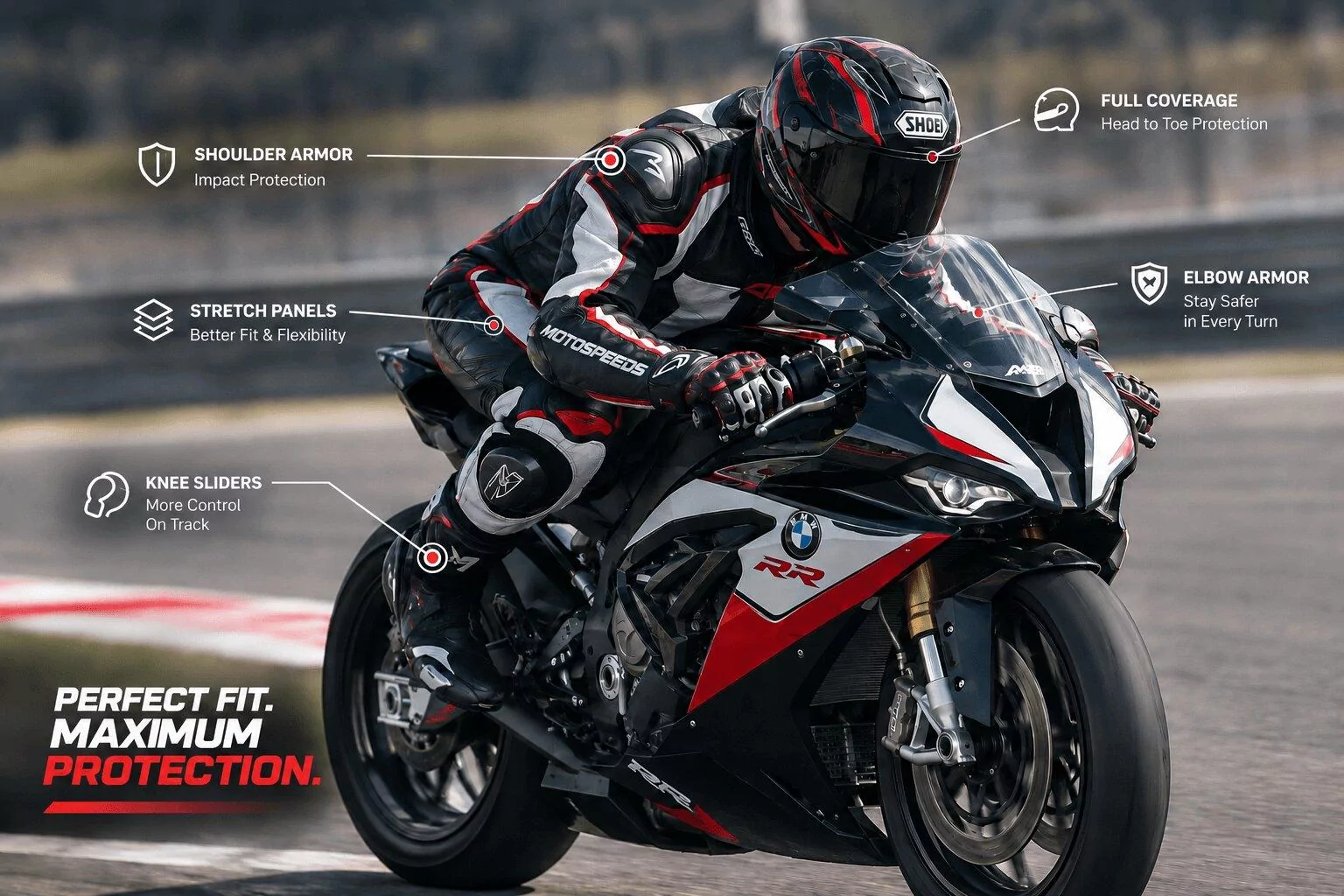
Table of Contents
- Choose Gear Based on Your Riding Style
- Fit, Sizing, and Features to Check
- Safety, Comfort, and Movement
- Buying Mistakes and Why Consider Leather Collection
- Final Buying Guide and Next Steps
Choose Gear Based on Your Riding Style
Different riding styles demand different gear features. Track-day riders typically need a secure fit in the riding position, strong material construction, and armor that stays aligned during aggressive cornering and acceleration. Sportbike riders often want a balance of protection and comfort for both road and track use, with stretch panels and ventilation for mixed conditions. Street riders may prioritize ventilation, flexibility for movement off the bike, and easier removal after short urban rides.
Touring and long-distance riders benefit from comfort features like ventilation, soft lining, and flexibility for hours in the saddle. First-time buyers should focus on fit accuracy, armor placement, and construction quality before choosing colors or logos. Experienced riders upgrading from older gear often know their body measurements and can decide more quickly between standard and custom sizing. The key is matching the product type and features to how you actually ride, not how you want to look on the bike.
Fit, Sizing, and Features to Check
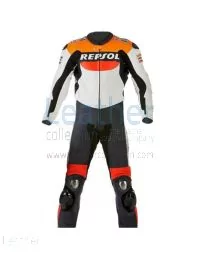
When you prepare a motorcycle racing suit, fit is the foundation of everything else. One-piece suits keep the jacket and pants connected as one garment, which is better suited for track-day and sport-focused riding because the armor stays aligned during aggressive movement. Two-piece suits are practical for street riders because you can remove the jacket separately and move more freely off the bike. If you choose a two-piece suit, a full connection zipper between jacket and pants keeps the armor aligned during riding. Two-piece options are listed under .
Standard sizing works well when your body measurements match the size chart provided. Custom sizing can help when your measurements fall between two sizes, potentially improving fit and armor placement for your specific body shape. Fit should always be checked in riding position, not standing position. The gear should feel snug but not restrictive. Too loose and armor may shift away from the joint while riding. Too tight restricts comfort and movement, meaning you'll wear it less often. Take measurements carefully before ordering, and if you're uncertain, contact support before committing to a purchase.
Review these key features before ordering:
- Material: Cowhide leather offers durability and abrasion resistance. Check the leather type and thickness specifications provided by the manufacturer, not just the visual appearance.
- Armor: Armor tested to EN 1621 should be included or clearly listed as an option. Check the armor type, placement, and whether it covers the areas you need for your riding style.
- Construction: Look for reinforced stitching, secure seams, sturdy zippers, and firm connection points. These details affect durability and long-term wear.
- Comfort: Stretch panels, ventilation, and soft lining improve comfort during long rides and affect how often the gear is worn.
- Compatibility: Check whether gloves and boots will fit comfortably with the suit, and confirm how a two-piece suit connects if that's your choice.
Safety, Comfort, and Movement
Safety standards help you compare gear objectively. According to SATRA, EN 17092 covers jackets, pants and one- and two-piece suits. Classes AAA and AA include mandatory impact protectors, class A includes optional hip protectors, class B gives abrasion protection without impact protectors, and class C offers impact protection only for the areas the protectors cover. The tests include abrasion resistance, tear strength and seam strength. This is not an armor impact standard. EN 1621 is the separate standard for impact protectors, and SATRA describes Level 1 and Level 2 as progressively stricter performance levels. Check your product label or documentation to see which standards apply to your gear. A rating on the armor does not rate the whole garment, so read the product details carefully.
Impact protection depends on armor quality, fit, coverage, and placement. A well-fitted suit with armor that stays in the correct position offers broader protective coverage than loose gear where armor can shift. However, a rating does not prevent injury on its own. Riding style, speed, body position, and the nature of any incident all affect real-world outcomes. Focus on choosing gear that fits correctly and includes the armor coverage you need for your riding type.
Comfort matters because uncomfortable gear may be worn less often or removed at critical moments. Ventilation, stretch panels, and quality lining affect how long you can ride comfortably. Value depends on fit, features, construction, armor, customization options, and support from the manufacturer. Price alone should not decide a purchase. A suit that fits well and includes the features needed is a better choice than one that does not fit the body or riding style correctly.
Riders ready to compare protective gear for track and road use can review
to compare options by fit, armor and construction.Buying Mistakes and Why Consider Leather Collection
Common buying mistakes happen when riders prioritize appearance over function. Avoid these pitfalls before ordering:
- Choosing by design only: Select gear based on fit, armor, and construction. Style should come after function.
- Ignoring riding-position fit: Always test fit in riding position, not standing position. The suit should feel secure when you're on the bike.
- Guessing size: Take accurate measurements. If you're between sizes, contact support before ordering.
- Ignoring armor placement: Confirm that armor aligns with your shoulders, elbows, back, and knees in the riding position.
- Buying too loose for comfort: Loose gear may feel comfortable standing still but can let armor move while riding.
- Buying too tight for style: Tight gear restricts movement and reduces comfort, meaning you'll wear it less often.
- Ignoring gloves and boots compatibility: Confirm that your gloves fit the wrist area and boots fit the ankle area without bunching or gaps.
- Not checking product details: Read the full product description before ordering. Armor, lining, and features vary by product.
- Not reading the order terms: Understand how custom-sized gear is ordered before placing the order.
Leather Collection makes hand-stitched, made-to-order motorcycle gear, including racing suits, leather jackets, gloves and boots, with standard and custom sizing options. Product details for each item list the leather, armor and construction, which makes it possible to compare options before ordering. Track-focused buyers can start with the .
For buyers who want to review a real product example before ordering,
shows a made-to-order racing suit with its listed armor and sizing options.Final Buying Guide and Next Steps
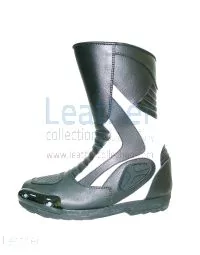
When you prepare a motorcycle racing suit, follow these practical steps. First, identify your primary riding style—track-day, sportbike, street, or touring. Choose the right product type: one-piece for track focus or two-piece for street flexibility. Measure your body carefully using the manufacturer's size chart. Compare whether standard sizing matches your measurements or if custom sizing would improve fit and armor placement. Check the armor type, placement, and construction details in the product description. Review comfort features like ventilation, stretch panels, and lining based on your climate and riding duration. Confirm that gloves and boots will fit comfortably with the suit, for example white racing boots such as the . Read the order terms before placing an order for custom-sized gear. If your measurements fall between two sizes, contact Leather Collection support to discuss which option would suit your body and riding needs.
Well-chosen motorcycle gear can help support comfort, armor placement, and protective coverage for your riding style. Take time to measure accurately, check product details, and understand how fit affects both comfort and safety. The right suit is one that fits your body in riding position, includes the armor and construction you need, and matches your climate and riding use. Leather Collection offers custom sizing and made-to-measure options for riders who fall between sizes.
Frequently Asked Questions
Is custom motorcycle gear better than standard size gear?
Custom sizing is not always better. If your measurements match a standard size exactly, standard sizing can work well. If they fall between two sizes or your body shape is unusual, custom sizing can improve fit and armor placement. Choose based on whether a standard size actually fits your measurements, not on the assumption that custom always fits better.
Should I choose a one-piece or two-piece motorcycle racing suit?
One-piece suits suit track-day and sport riding because the jacket and pants stay connected, keeping armor aligned during aggressive movement. Two-piece suits are practical for street riders because the jacket can be removed separately. A two-piece suit needs a full connection zipper. The choice depends on primary riding style, not on one type being better for every rider.
How tight should motorcycle gear fit?
Gear should fit snugly but not restrictively. In riding position, it should feel secure without limiting movement or breathing. Too loose and armor may shift while riding. Too tight restricts comfort and movement, so the gear gets worn less. Test the fit in riding position, not standing, and treat any shifting armor as a sign the size is wrong.
What armor should I check before ordering?
Check whether armor tested to EN 1621 is included or optional, and confirm its type, placement and coverage, typically shoulders, elbows, back and knees. Level 1 and Level 2 are performance levels within that standard. Read the product label to see which standard applies. If the product details do not explain the armor clearly, ask before ordering.
What should I do if my measurements are between two sizes?
Contact the seller before ordering and ask whether the larger or smaller standard size works, or whether custom sizing would improve fit and armor placement. Guessing risks gear that does not fit the body in riding position. Giving the seller your measurements, height and riding style helps them recommend the right option.
Written by the Leather Collection Editorial Team.