 Canada
  Brazil
  Germany
  France
  Italy
Italy  Switzerland
  Sweden
  Spain
Spain  Great Britain
  Norway
  Russia
  South Africa
  Japan
Japan  New Zealand
  Australia
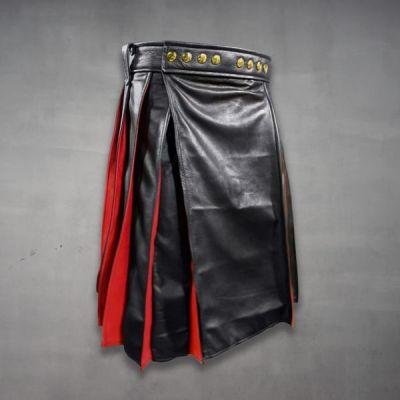
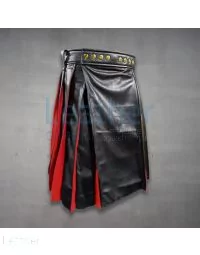
The in black and red combines a traditional garment with leather and a two-color look. Kilts have long been associated with Scottish heritage (History of the kilt), and a leather version brings a different texture and a more modern attitude to that shape.
Key Takeaways
- Black and red leather gives the kilt a high-contrast look that stands out without extra accessories.
- Pleats add movement and keep the garment recognizable as a kilt.
- Leather can be styled down with a tee or up with a shirt or jacket, so it covers several occasions.
- Wipe, air dry, condition sparingly and store in a breathable bag to keep the leather supple.
Why Choose Leather for a Kilt?
Kilts are traditionally worn at special occasions and ceremonies, and the great kilt is first recorded in 1594. Leather adds a rugged, modern twist to that heritage. It is a tough material that handles regular wear, which makes it a practical choice for a garment meant to be worn often rather than kept for one event.
Color and Design
The appeal of this kilt lies in its black and red color combination. Black reads as strong and understated, while red adds energy and draws the eye. The pleats add movement and depth, so the garment looks structured when standing and flows when walking.
Styling for Different Occasions
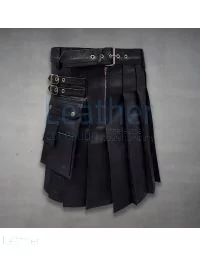
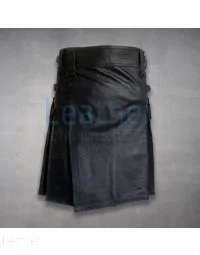
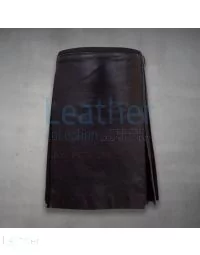
A leather kilt is rooted in tradition but suits themed events, casual gatherings and nights out. Pair it with a t-shirt for a relaxed look, or choose a formal shirt, or a , for an evening occasion. The shows a plainer black alternative for those who prefer less color.
Comfort and Fit
Leather is tough but can feel comfortable when it is cut and sized well. Good fit matters more than anything else: the waistband should sit securely and the hem should fall at a consistent length around the body. Readers who want specific measurements or details can browse and compare the options.
How to Care for Your Leather Kilt
To keep a in good condition, a few habits help:
- Keep it away from excess water: if it gets wet, pat it gently and let it air dry away from heaters.
- Conditioning: follow the maker's care label; whether and which conditioner suits depends on the leather's finish.
- Store with airflow: use a breathable garment bag in a cool, dry place away from direct light; damp storage encourages mold. Museum guidance from the Canadian Conservation Institute puts the mold-risk threshold at about 65% relative humidity, but it is written for heritage collections, not worn clothing.
Final Thoughts
The black and red pleated leather kilt is a modern take on a traditional garment. Bold colors, a structured shape and a tough material make it a distinctive piece for riders, concert-goers and anyone who prefers an outfit with character. More men's pieces for the rest of the outfit are in the .
Frequently Asked Questions
What does a black and red leather kilt look like?
It is a pleated, knee-length leather kilt in two colors, black and red. The contrast makes it a bold piece, and the pleats give it movement. It is meant as a fashion garment that borrows the shape of the traditional kilt rather than a tartan outfit for ceremonial wear.
How should a pleated leather kilt be styled?
For a relaxed look, wear it with a plain t-shirt and boots. For a dressier outfit, add a crisp shirt or a fitted jacket. Because the kilt already carries two strong colors, simple black or neutral tops keep the overall look balanced and let the garment stand out.
Can a leather kilt be worn outside of events?
Yes. Many wearers choose leather kilts for rallies, concerts and casual days out as well as themed events. The structured material and clear pleats make the garment practical for regular wear, as long as the size and cut allow comfortable movement when walking, sitting or riding.
How do I look after leather in humid weather?
Keep it away from damp, store it in a breathable bag with air circulation and avoid sealed plastic covers. Damp storage encourages mold, so keep it somewhere dry and ventilated and follow the care label. Museum guidance from the Canadian Conservation Institute puts the mold-risk threshold at about 65% relative humidity, but it is written for heritage collections, not worn clothing.
Written by the Leather Collection Editorial Team.