
 Canada
  Brazil
  Germany
  France
  Italy
Italy  Switzerland
  Sweden
  Spain
Spain  Great Britain
  Norway
  Russia
  South Africa
  Japan
Japan  New Zealand
  Australia
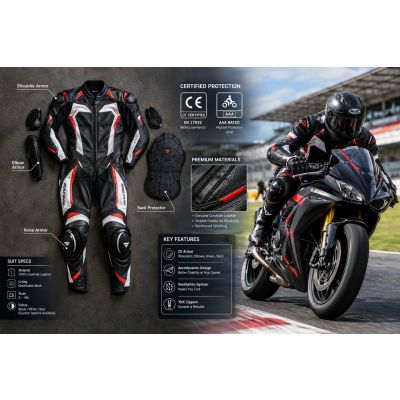
When you're shopping for motorcycle gear, product pages can feel overwhelming. Armor ratings, fabric codes, certification letters—it's easy to misunderstand what you're actually buying. A rider might see an "AA" label and assume it means maximum impact protection, only to discover later that the rating measures abrasion resistance, not crash impact. Another might buy a jacket based on leather thickness alone, missing critical details about armor placement, seam strength, or fit. Reading motorcycle gear specifications correctly matters because the wrong interpretation can lead to buying gear that doesn't match your riding style or safety needs. This guide breaks down how to read motorcycle gear product specs accurately, what the standards actually mean, and what questions to ask before you buy.
Quick Answer
Motorcycle gear specifications include abrasion ratings (like AA under EN 17092), impact armor levels (EN 1621), leather thickness, stitching quality, and armor placement. The AA or AAA rating indicates tested abrasion and tear resistance—not impact protection. Impact protection comes from the armor itself (Level 1 or Level 2 under EN 1621). To avoid being misled, check the product label for certification marks, compare armor coverage across multiple suits, verify fit against your measurements, and understand that no single number tells the whole safety story. Proper fit, armor positioning, and your riding behavior all matter as much as the materials and ratings.
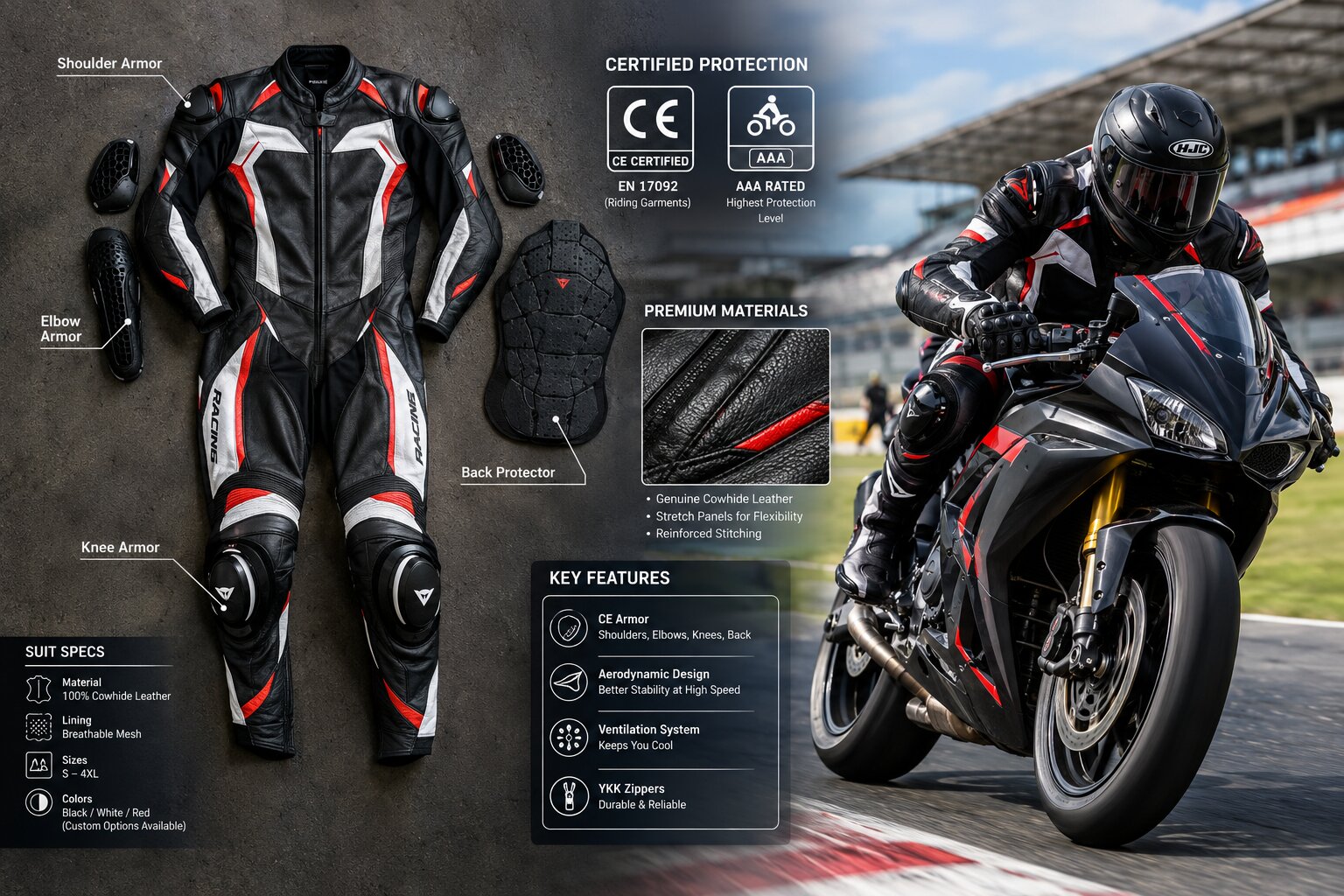
Table of Contents
- What Do Abrasion Ratings Like AA Actually Mean?
- How Impact Armor Ratings Work (EN 1621)
- Leather Quality and Thickness: What Matters
- Why Armor Placement Is as Important as the Rating
- How Fit and Comfort Affect Actual Protection
- Common Mistakes When Reading Gear Specs
- What to Check Before You Buy
What Do Abrasion Ratings Like AA Actually Mean?
The letters you see on motorcycle gear—AA, AAA, A, B, C—come from the EN 17092 standard, which tests how well a garment resists abrasion (scraping), tearing, and seam strength. This is a European standard that applies to all motorcycle apparel, whether leather or textile mesh.
Here's the key: these letters do not measure impact protection. They measure how long the material takes to wear through during a slide. An AAA-rated jacket has stronger seams and more durable fabric than an A-rated one, but the letter grade tells you nothing about how well armor inside that jacket absorbs impact force.
The rating system works like this: the garment is tested by rubbing it against abrasive material under controlled conditions. The longer it takes to tear or wear through, the higher the rating. AAA is the highest; C is the lowest. For a sportbike or track-day rider, a higher abrasion rating (AA or AAA) is valuable because slides happen fast and the gear needs to survive the friction. For a city commuter, an A-rated jacket may be sufficient if you're not planning high-speed track days.
But here's what riders often miss: an AAA-rated jacket with poor-quality armor inside offers less real protection than an AA-rated suit with excellent CE-certified armor positioned correctly over impact zones. The letter grade is only part of the story.
How Impact Armor Ratings Work (EN 1621)
Impact armor—the padding inside your jacket, on your elbows, knees, shoulders, and back—is tested separately under EN 1621. This standard measures how much force the armor can absorb and how much energy is transmitted to your body during an impact.
Armor comes in two levels:
- Level 1: Tested at lower impact speeds and forces. Suitable for street riding and general protective use.
- Level 2: Tested at higher impact speeds and forces. Better protection for track riding, racing, and high-speed street use.
The test involves dropping a weighted object onto the armor from a set height and measuring how much force reaches a sensor underneath. Higher levels indicate the armor handled more energy without transmitting dangerous levels of impact to the body.
When you read a product spec, look for the armor certification marking on the label or in the detailed description. It should say something like "EN 1621-1 Level 2" for limb protectors or "EN 1621-2 Level 2" for back protectors. If the product description doesn't mention the armor level, ask the seller or check the manufacturer's documentation. Don't assume a high abrasion rating means high-level armor.
Leather Quality and Thickness: What Matters
Leather thickness is often listed in millimeters. Thicker leather (1.2 mm to 1.6 mm) generally resists abrasion better than thin leather (0.8 mm to 1.0 mm). But thickness alone doesn't tell you whether the leather is durable, flexible, or suitable for your riding style.
Quality leather matters more than a single thickness number. Premium leather is tanned and finished to resist cracking, maintain flexibility in cold weather, and age well with use. Lower-quality leather can crack, become stiff, or develop weak spots. A product spec sheet might list thickness, but it rarely describes tanning method or leather grade—so you may need to read reviews from riders or contact the manufacturer.
For street and city riding, a 1.0–1.2 mm leather jacket offers good balance between protection and flexibility. For track days and racing, 1.2–1.4 mm leather is more common because the extra abrasion resistance matters during slides. Custom racing suits often use premium leather at the higher end of that range.
Also check for reinforced panels. Many jackets and suits have extra leather or double-layer panels on the shoulders, elbows, and hips—the zones most likely to slide. These reinforced zones provide better abrasion protection than single-layer leather, even if the overall thickness is the same.
Why Armor Placement Is as Important as the Rating
A suit with Level 2 armor in the wrong location protects you less than a suit with Level 1 armor positioned correctly over your impact zones. When you read a product spec, look for detailed armor coverage maps or descriptions.
Critical impact zones include:
- Shoulders and upper arms
- Elbows
- Knees
- Hips
- Back (spine and tailbone area)
- Chest (on some suits)
A good product description will say something like "removable Level 2 armor at shoulders, elbows, knees, and hips" or show a diagram. If the description is vague—just listing "CE-certified armor" without saying where—request more details before buying.
On a motorcycle, your body position matters too. A sportbike rider leans forward more, so shoulder and elbow protection is critical. A cruiser or upright street bike rider may benefit more from hip and tailbone protection. Check whether the suit's armor is positioned for your riding style.
Riders who want better protection for city and road use can explore our
for gear designed around safety, fit, and everyday riding comfort.How Fit and Comfort Affect Actual Protection
A perfectly rated suit that doesn't fit well offers less protection than a well-fitting suit with slightly lower ratings. Here's why: if armor shifts during a ride, it won't be over the impact zone when you need it. If a jacket is too loose, it can bunch up or move around during a crash. If it's too tight, you'll ride tense, which affects your control and increases fatigue on long rides.
Product specs should include a detailed size chart with chest, waist, sleeve length, and inseam measurements. Compare your measurements to the chart, not to your street clothing size. Motorcycle gear is designed for a riding position, so the fit feels different from a regular jacket.
Custom sizing is valuable for riders who fall outside standard ranges or who want armor positioned exactly where they need it. Many high-performance manufacturers offer custom racing suits with made-to-measure armor placement, custom leather thickness, and personalized padding in high-impact zones.
Test the fit in a riding position if possible. Sit on a bike and reach for the handlebars. The jacket should not pull up your back, and the sleeves should allow full arm extension without bunching. Gloves should allow a full grip without pinching. Boots should flex at the ankle without slipping. Comfort during the fit test usually means the gear will stay in position during a ride.
Common Mistakes When Reading Gear Specs
Mistake 1: Confusing AA with impact protection. The AA rating is an abrasion grade, not an impact measure. You need to check the armor rating (EN 1621) separately to understand impact protection.
Mistake 2: Ignoring armor placement. A suit with armor in only two locations (elbows and knees) offers less coverage than one with shoulder, elbow, knee, hip, and back armor, even if the armor level is the same.
Mistake 3: Buying based on leather thickness alone. A 1.4 mm jacket from a budget brand might be less durable than a 1.2 mm jacket from a premium leather manufacturer. Leather quality, tanning, and construction matter as much as thickness.
Mistake 4: Overlooking seam quality. The EN 17092 standard tests seam strength because seams are a common failure point during slides. Check whether the product description mentions reinforced or double-stitched seams, especially in high-stress areas like armholes and crotch seams.
Mistake 5: Not checking the fit. A spec sheet might list all the right ratings and armor, but if the suit doesn't fit your body or your riding position, the armor won't work as designed.
Mistake 6: Assuming one certification covers everything. EN 17092 covers the garment's abrasion resistance. EN 1621 covers the armor. These are separate tests. A product needs both certifications to offer comprehensive protection.
What to Check Before You Buy
Before purchasing motorcycle gear, work through this checklist to make sure you understand what you're buying:
- Abrasion rating: Look for the EN 17092 class (AAA, AA, A, B, or C). Check the product label or detailed description.
- Armor level: Confirm the armor is EN 1621 Level 1 or Level 2, and note which body areas are covered.
- Armor coverage: Request a diagram or detailed description showing where armor is located. Shoulders, elbows, knees, hips, and back are standard.
- Leather type and thickness: Note the thickness (usually 1.0–1.4 mm for street and track gear) and ask about the leather grade or tanning method if the description doesn't say.
- Reinforced zones: Look for double-layer panels or reinforced stitching on high-impact areas.
- Seam quality: Check whether seams are reinforced or double-stitched. This matters for durability.
- Size and fit: Compare your measurements to the size chart. Measure your chest, waist, sleeve length, and inseam. Don't assume motorcycle gear fits like street clothes.
- Riding position: Sit on a motorcycle and test the fit if possible. Reach for the handlebars and check that nothing pulls or bunches.
- Armor positioning: Make sure armor stays in place when you move. Removable armor should fit snugly; fixed armor should be sewn securely.
- Care and maintenance: Check whether the gear requires special cleaning or conditioning. Leather gear often needs regular care to stay flexible and durable.
For riders comparing real protective gear, the
shows how armor placement, reinforced construction, and fit work together to provide real-world protection.Frequently Asked Questions
What does an AA rating mean on motorcycle gear?
An AA rating (EN 17092) indicates that the garment has passed abrasion, tear, and seam strength tests at a high level. It does not measure impact protection. AA-rated gear resists scraping and tearing better than lower-rated gear, which matters during slides at speed. However, impact protection comes from the armor inside (EN 1621), not from the abrasion rating itself.
Is Level 2 armor always better than Level 1?
Level 2 armor is tested at higher impact forces and typically offers more protection than Level 1. However, Level 1 armor positioned correctly over your impact zones may protect you better than Level 2 armor in the wrong location. For street riding, Level 1 is often sufficient. For track days and racing, Level 2 is standard. Your riding speed and style should guide your choice.
How thick should motorcycle leather be?
Street and city riding gear typically uses 1.0–1.2 mm leather. Track-day and racing gear often uses 1.2–1.4 mm or thicker. Thicker leather resists abrasion better but may be stiffer and less flexible. Quality of the leather matters as much as thickness. A premium 1.0 mm leather can be more durable than a lower-quality 1.2 mm leather.
What if the product description doesn't list armor details?
Contact the seller or manufacturer and ask for the armor certification (EN 1621 level), the specific body areas covered, and a diagram if available. A vague description is a red flag. Reputable gear makers provide detailed armor specifications because riders need that information to make safe choices.
Can I trust online reviews to understand gear specs?
Reviews are helpful for fit feedback and real-world durability, but they don't replace the official product specifications. A reviewer might say "great protection" without understanding the difference between abrasion ratings and impact armor. Always read the official product label and certification marks alongside reviews.
Does custom sizing affect safety ratings?
Custom sizing does not change the material ratings (EN 17092 or EN 1621). However, custom sizing allows armor to be positioned exactly where you need it for your body shape and riding style, which can improve actual protection. A custom suit also fits better, which helps armor stay in place during a ride.
What should I do if my gear gets damaged in a crash?
Inspect the gear carefully after any crash. Visible damage to leather, seams, or armor may mean the gear needs repair or replacement. Armor that has been impacted may have internal damage that isn't visible. Contact the manufacturer or a gear specialist to determine whether the gear is still safe to use or should be serviced.
Conclusion
Understanding motorcycle gear specifications takes practice, but it's worth the effort. The key lesson is this: no single number—not the abrasion rating, not the armor level, not the leather thickness—tells the whole story. Safe riding gear depends on abrasion resistance (EN 17092 rating), impact protection (EN 1621 armor level and placement), leather quality, reinforced construction, proper fit, and your own riding behavior.
When you read motorcycle gear product specs, separate the abrasion rating from the impact armor rating. Check where armor is positioned on your body. Verify fit against your measurements. Ask questions if the product description is vague. Look for certification marks on the label. Compare specs across multiple suits before buying.
Leather Collection is here to help you understand protective gear and make safer buying decisions. Take time to learn what the specs mean, and you'll choose gear that actually matches your riding style, body, and safety needs. Ride with a better understanding of how fit, armor, and abrasion resistance work together to reduce injury risk.