 Canada
 Brazil
 Germany
 France
 Italy
 Switzerland
 Sweden
 Spain
 Great Britain
 Norway
 Russia
 South Africa
 Japan
 New Zealand
 Australia

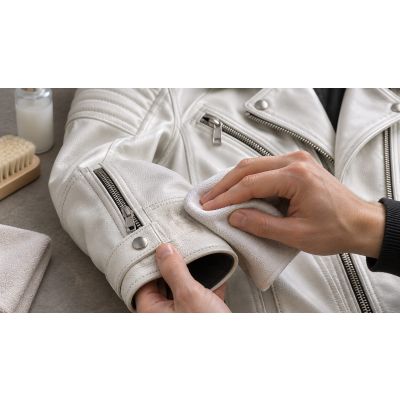
Short answer: clean white leather early and gently. Dry-brush loose grime, wipe with a barely damp soft cloth and a mild leather cleaner, treat dye transfer the same day, and test every product on a hidden spot first. Avoid heat, bleach, acetone and household stain removers. If a mark does not shift after a gentle first move, stop and ask a professional.
White and light leather shows everything: denim dye, glove marks, road grime, sweat and even sunlight. That is why it pays to know the cause of a mark before reaching for a cleaner. This guide covers jackets and race suits, because a white race suit picks up dirt in places a jacket never does.
Why white leather shows everything
Most white leather is pigmented, meaning a colored coating sits on top of the grain. That coating gives an even finish and is easier to wipe than uncoated leather, but it can scuff, pick up dye and yellow. Aniline and lightly finished white leathers are more porous and mark more readily. Which one a particular garment uses is a question for the maker, so check the product page or ask us before you order.
Four things cause most of the trouble.
- Dye transfer from dark denim, bags, gloves or linings, especially when new or damp.
- Everyday grime at collars, cuffs, hems and pockets.
- Body oils and sweat at the neck, underarms and inner sleeves.
- Sun and heat, which can turn white leather cream or yellow over time.
Before you start: test and tools
Have these ready.
- Soft white cloths, which will not leave lint or transfer color
- A soft brush
- A mild leather cleaner suitable for light or pigmented leather, following its label
- A little distilled water
- A leather conditioner for light leather
Test the cleaner on a hidden area, such as inside a hem or under a flap, and let it dry fully before judging the result. Do not use bleach, acetone or nail-polish remover, magic erasers, baby wipes with alcohol or perfume, or household stain removers on finished leather. They can strip the finish or leave dull patches. Check the cleaner's label against your garment's care instructions.
Routine wipe-down for jackets
Do this every few wears while the dirt is still light, not after it has set.
- Brush off dust and loose grit with the soft brush.
- Dampen a cloth with a small amount of water or diluted cleaner, wring it out until it is barely damp, and wipe in gentle strokes.
- Follow with a second, dry cloth to remove moisture.
- Air dry at room temperature away from heat and sun.
Collar and cuffs
These pick up skin oils and fabric dyes. Wipe them first and most often, and do not scrub, because rubbing wears through the finish.
Hem and pockets
Hands, bags and seats all touch these areas. Wipe them the same way, and check the pocket edges for dye from jeans.
Race suits: knees, elbows, hump and bike contact
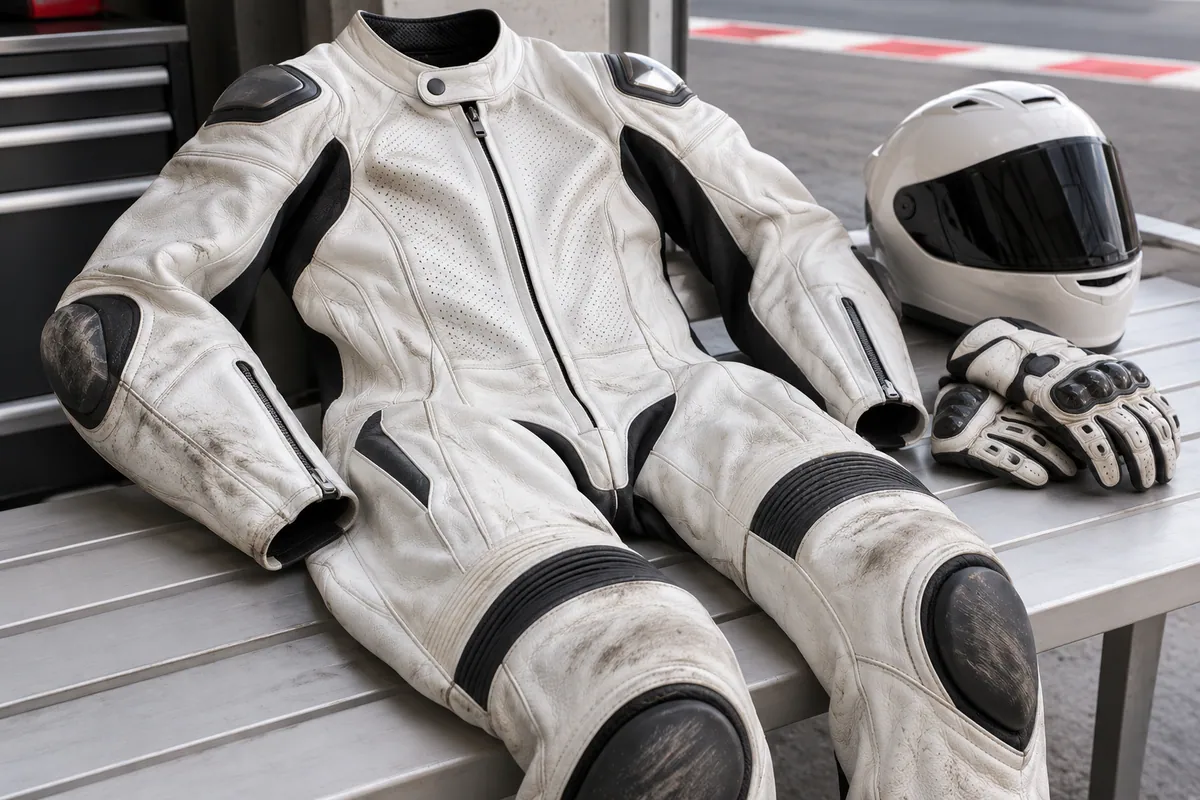
White race suits are common in replica ranges, and they dirty in a pattern. Knee sliders and inner knees collect tire and road marks. Elbows and forearms mark from bike contact. The tail of the suit and the hump pick up seat and strap dirt. The inner thighs and crotch collect tank and seat contact. Cleaning has to avoid soaking perforated panels, stretch panels, the lining and any zippers.
- Use a barely damp cloth, never run water through perforations.
- Clean one panel at a time and dry each with a towel.
- Keep liquid away from the lining and from stretch fabric edges.
- Hang the suit on a wide hanger to dry, away from heat.
For a full routine, see our guide to cleaning a motorcycle race suit, and for the general leather method, how to clean a leather jacket.
Fixing specific marks
| Mark | Likely cause | First move | Stop point |
|---|---|---|---|
| Blue-gray color transfer | Denim, bags, gloves | Wipe at once with a barely damp cloth and mild cleaner | If the mark lightens little after two passes, stop; scrubbing spreads dye |
| Scuffs | Contact with rough surfaces | Wipe gently with damp cloth | If the finish itself is worn, a professional should color-match |
| Ink | Pens, labels | Blot only | Do not use alcohol or solvents; get professional help |
| Road tar or grease | Road, chain, tools | Blot fresh grease; do not spread | Old or large marks go to a professional |
| Sweat marks and yellowing at the neck | Body oils | Wipe early with mild cleaner | Once yellowed deep, cleaning will not reverse it |
| General grime | Road dust, handling | Dry brush, then wipe | Stop if the cloth shows color from the leather itself |
The rule behind every row: the sooner you act, the less you need. A mark treated the same day often wipes off. A mark left for months has often bonded with the finish.
Stopping yellowing and cracking
Yellowing comes mostly from sun, heat and body oils, and it is slow. To slow it down:
- Store white leather out of direct sunlight, in a cool, dry place.
- Use a breathable garment cover, not a sealed plastic bag.
- Keep it away from dark fabrics, newspaper and dyed linings that can transfer color in storage.
- Condition lightly with a product suited to light leather, and test it first, since some conditioners darken pale hides.
Our guides to cleaning and conditioning a leather jacket and dry cleaning leather add detail on routine care and professional cleaning.
When to stop and call a professional
Stop if the cleaner lifts color from the leather, if a mark spreads, if the finish looks dull or sticky, or if the stain is ink, heavy grease or years old. A leather cleaner who works with light finishes will tell you what is realistic. On a race suit used for riding, do not risk the stitching or the structure on an experimental cleaning method.
FAQs
Can you use baby wipes on white leather?
It is not recommended. Wipes can contain alcohol, fragrance or moisturizers that dull or stain finished leather. Use a barely damp white cloth and a mild leather cleaner instead.
How do you get dye transfer off a white leather jacket?
Act quickly. Wipe with a barely damp cloth and a mild leather cleaner, and stop if the mark does not lighten after a couple of gentle passes. Old dye transfer usually needs a professional.
Why is my white leather jacket turning yellow?
Sunlight, heat, body oils and age all contribute, and some finishes yellow faster than others. Storage out of the sun helps slow it down; established yellowing is hard to reverse.
Can you wash a white leather race suit?
Do not machine wash or soak it. Clean panels with a barely damp cloth, keep water away from perforation, lining and stretch panels, and follow the maker's care instructions.
How often should you clean white leather?
Wipe it lightly after heavy use and do a fuller clean when it looks dirty. Frequent light wipes work better than rare heavy scrubbing.
Does white leather need conditioner?
Occasionally, if it feels dry. Choose a conditioner suited to light leather and test it on a hidden spot, since some darken pale finishes.
If you want a light-colored suit made to order, browse our leather race suits or the MotoGP replica jackets.