 Canada
 Brazil
 Germany
 France
 Italy
 Switzerland
 Sweden
 Spain
 Great Britain
 Norway
 Russia
 South Africa
 Japan
 New Zealand
 Australia

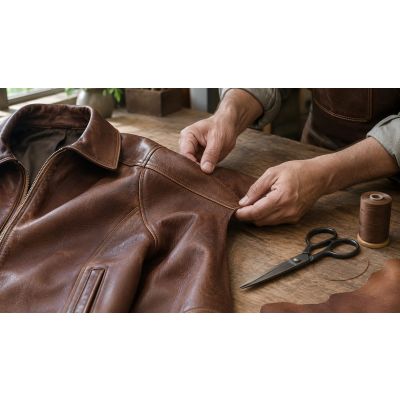
Short answer: Often yes for sleeve length and hem, sometimes for the waist, and almost never for shoulders and chest. Check the shoulder seam before you do anything else. If it sits in the wrong place, alteration rarely fixes it, and a better-fitting jacket is the real answer.
The quick answer by body part
| Area | Verdict | Why |
|---|---|---|
| Sleeve length | Possible | Can be shortened at the cuff or, with more work, at the shoulder; depends on cuff details |
| Jacket length (hem) | Possible | Shortening is simpler than lengthening; the lining and hem edge must be reworked |
| Waist | Risky | Taking in at the side seams works in some designs, but can distort pockets and zips |
| Shoulders | Not realistic | The shoulder seam, armhole and sleeve cap are cut together; moving one changes the rest |
| Chest | Not realistic, usually | Linked to the armhole and shoulder; small adjustments are sometimes possible |
| Collar | Risky | Tied to the neckline and shoulder seam |
| Lining | Easy to Possible | Usually replaceable, since it is fabric, not leather |
These ratings reflect common practice, not a promise for your jacket. A skilled leather specialist will assess it in person. Leather Collection does not offer alterations or repairs on delivered garments, so this guide is general advice for finding someone who does.
Why leather is harder than cloth
With cloth, a tailor can unpick a seam, resew it and press out the marks. Leather does not forgive that.
- Needle holes are permanent. Every stitch leaves a hole. Unpicking a seam and moving it leaves a visible row of old holes.
- You cannot iron out marks. Creases and marks from handling may stay.
- Seam allowance is limited. There is often little spare leather inside a seam to let out.
- Lining and padding add layers. Many alterations mean reworking the lining as well.
Many general tailors will refuse leather for these reasons, and that is sensible. Leather needs a heavy machine and different needles.
Sleeves and length in detail
Sleeves are the most common request. There are two ways to shorten them. The first is at the cuff: the cuff is removed, the sleeve trimmed and the cuff reattached. This is the cleaner method if the jacket has a plain or zipped cuff, but it can interfere with cuff zips and cuff pockets. The second is at the shoulder, which keeps the cuff details intact but means opening the armhole, a much bigger job.
Ask a leather specialist:
- Which method will you use, and why?
- What happens to the cuff zip, buttons or snaps?
- Will the sleeve lining be altered to match?
The hem is similar. Shortening is usually simpler than lengthening, because lengthening needs extra leather in a matching color and grain.
Waist and body shaping
Taking in a jacket at the side seams can improve the shape, especially on a looser casual jacket. The risk is the line of the garment. Pockets sit near the side seams, and pulling the seam in can pull the pocket, move the zip and leave the hem hanging unevenly. A jacket that was cut straight can end up looking pinched.
The same applies to leather pants, where waist and seat adjustments are limited by the seam layout and the leather's firmness. If you are weighing it up for trousers, see custom leather pants for what a made-to-measure approach involves.
Why shoulders and chest cannot be fixed
Think of a jacket pattern as a connected set of curves. The shoulder seam, the armhole and the sleeve cap are cut to fit each other. If the shoulder is too wide, the seam sits down the arm and the sleeve hangs from the wrong place. Moving the shoulder seam inward means recutting the sleeve top and the armhole at the same time, and the leather does not have the spare material to do that cleanly.
The chest works the same way. It is tied to the armhole, so letting out the chest means changing the armhole too. Small changes are sometimes possible; a full size is not.
That is why the shoulder seam is the first thing to check. If the seam sits at the edge of your shoulder bone and the problem is somewhere else, you have a decent chance. If it does not, move on.
Cost versus buying right
Alteration prices vary widely by region and by specialist, and we give no figures here. Instead, use this method:
- Get a written quote from a leather specialist, not a general tailor.
- Add the quote to what you paid or what the jacket is worth to you.
- Compare the total with a new jacket that fits properly.
If the total is close to the cost of a replacement, and the fix is only partial, buying right is usually the better route. Made-to-measure is one way to do that: the jacket is cut to your measurements from the start, so there is nothing to alter. At Leather Collection that is Custom Size, and you can change size or options any time before the order is confirmed and production starts. See custom leather jackets and our comparison of made to order vs off the rack.
Before buying any jacket online, take your measurements. Our guide on how to measure yourself walks through it, and common leather jacket sizing mistakes lists the errors that lead to alterations in the first place.
A simple decision check before you spend anything
Put the jacket on, zip it and stand in front of a mirror. Then work through these in order.
- Shoulder seam. Does it sit on the edge of your shoulder bone? If it hangs down the arm or pinches up toward the neck, stop. Alteration will not solve it.
- Chest. Can you zip it and raise your arms to shoulder height without the back pulling? If not, the chest or armhole is the issue and is hard to change.
- Sleeve length. With your arms forward, do the cuffs reach the wrist bone? Too long is a fair candidate for alteration. Too short is much harder, since leather cannot be extended without visible joins.
- Length and waist. These are cosmetic. They matter less and are easier to leave alone.
If only items three or four are off, a specialist may be able to help. If the first two fail, put the money toward a jacket that fits.
What to bring to the appointment
Wear the shirt or sweater you will normally wear under the jacket, bring any receipt or care label that names the leather, and take a photo of the fit problem from the front, side and back. A specialist can usually judge more from the jacket on your body than from a description. Ask for the quote and what they will and will not guarantee in writing, because leather work cannot be undone.
Also be clear about what you want. "Make it fit better" is vague; "shorten the sleeves by half an inch and keep the cuff zips working" is something a specialist can price and decide on.
How to find the right person
- Look for a leather specialist or a cobbler who works with hides, not just a general seamstress.
- Ask to see leather work they have done.
- Ask them to test any method on a hidden seam, such as inside the hem, first.
- Expect a refusal if the jacket is thin lambskin, heavily lined or very old. A refusal is useful information.
Some people try to stretch a tight jacket instead. Leather gives a little with wear but not by a full size; see does leather stretch or shrink?.
FAQs
Can a tailor take in a leather jacket?
Sometimes, at the side seams. The risk is distorting pockets, zips and the overall line. A leather specialist can tell you after seeing the jacket.
Can you shorten the sleeves on a leather jacket?
Often yes, at the cuff or at the shoulder. The cuff method is simpler but can affect cuff zips. Ask which method will be used.
Can you stretch a leather jacket that is too tight?
A little, over time, mostly at the elbows and waist. You cannot add a full size, and stretching sprays and wetting carry risks.
Is it worth altering a leather jacket?
If the fix is a sleeve or hem and the jacket is good quality, usually. If the shoulders or chest are wrong, usually not.
Can you alter a leather jacket you bought online?
The same rules apply. Check the seller's return policy first, since a jacket that fits badly in the shoulders is better returned than altered. Leather Collection accepts returns within 14 days of delivery with approval, but altered and custom-made items cannot be returned.
If the shoulders are the problem, have a jacket cut to your measurements instead: see custom leather jackets.