
 Canada
  Brazil
  Germany
  France
  Italy
Italy  Switzerland
  Sweden
  Spain
Spain  Great Britain
  Norway
  Russia
  South Africa
  Japan
Japan  New Zealand
  Australia

The aerodynamic hump on a motorcycle racing suit is a distinctive raised section built into the back of the garment. It's designed to smooth airflow around the rider's body during high-speed riding and racing. Understanding this safety and performance feature helps riders make better decisions when choosing protective gear for track days, road racing, or sportbike riding.
Many riders notice the hump on racing suits but don't fully understand its purpose. It's not just a style choice—it's an engineering feature that affects how air moves around your body, how the suit fits, and how protection works during a ride or crash. Whether you're shopping for your first racing suit or upgrading to higher-performance gear, knowing what this hump does and why it matters can help you pick gear that matches your riding style and safety needs.
Quick Answer
The aerodynamic hump on a motorcycle racing suit reduces wind drag and turbulence at high speeds by creating a smoother airflow path over the rider's back. This feature helps riders maintain better body position on the bike, reduces fatigue during long rides, and improves overall stability. The hump also influences how armor sits on the suit and affects the overall fit and comfort of the garment. It's a common design element on performance-focused racing suits built for track riding and sportbike use.
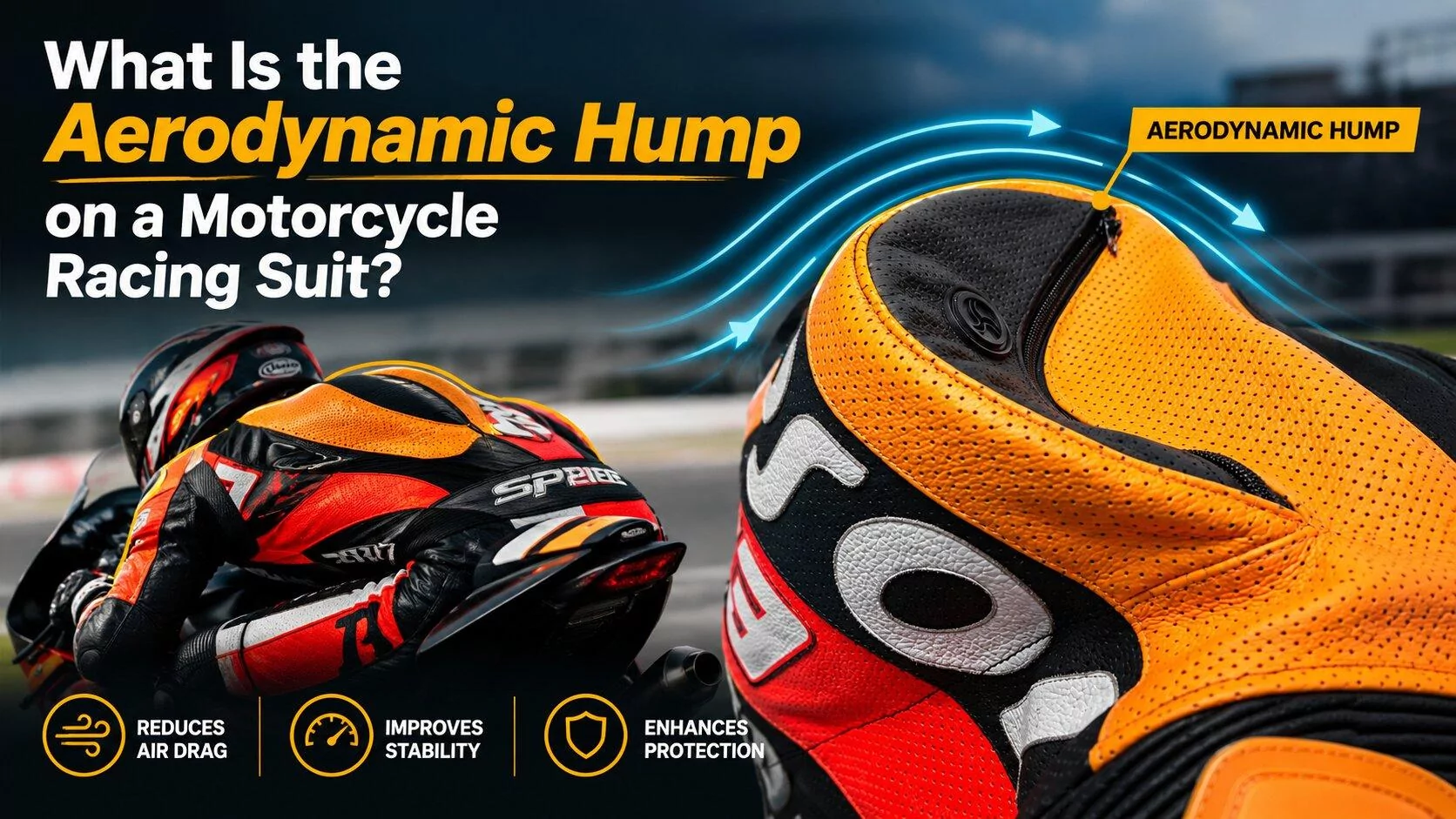
Table of Contents
- What Does the Aerodynamic Hump Mean for Rider Safety?
- Why This Safety Feature Matters on the Road and Track
- How It Helps During a Crash or Slide
- How the Hump Affects Armor Placement and Protection
- Fit, Comfort, and the Aerodynamic Hump
- What Riders Should Check When Choosing a Racing Suit
- Common Mistakes Riders Make About Racing Suit Design
- Final Buying Advice from Leather Collection
What Does the Aerodynamic Hump Mean for Rider Safety?
The aerodynamic hump is a raised, contoured section running down the center of the back. It's built into the suit's construction, not added as a separate piece. The hump creates a ridge that helps air flow smoothly around your body instead of creating turbulent pockets of wind pressure.
At lower speeds, the hump makes little difference. But as you increase speed—especially on the track or during sportbike riding—the effect becomes noticeable. The smoother airflow reduces the force of wind pushing against your upper body, which means you spend less energy fighting air resistance. This is why racing suits with aerodynamic humps are standard on competition gear and high-performance riding suits.
The hump also influences your riding posture. A well-designed hump encourages a forward-leaning position that matches how modern sportbikes and racing bikes are set up. This natural body alignment helps you stay comfortable during long rides and maintain better control on the bike. Comfort matters for safety because tired, uncomfortable riders make slower reactions and poorer decisions.
Why This Safety Feature Matters on the Road and Track
On the street, the aerodynamic hump helps reduce wind fatigue during city riding and highway cruising. Even at moderate speeds, wind pressure builds up against your body. A suit designed with a smooth aerodynamic profile reduces that constant pushing sensation, letting you focus on the road instead of fighting the wind.
For track-day riders, the hump becomes more critical. At racing speeds, aerodynamics directly affect how stable you feel on the bike. A suit that channels air smoothly around your back helps you stay planted in your seat, which improves your ability to feel what the bike is doing beneath you. This feedback is essential for safe, confident riding at the edge of grip.
Sportbike riders who spend time in an aggressive forward lean also benefit from the hump. It's designed to work with your body position when you're tucked low. Without it, you'd feel more wind buffeting and instability. The hump essentially "fits" the riding posture that modern bikes demand.
Long-distance road riders often overlook aerodynamics, but wind fatigue is real. A racing suit with an aerodynamic hump can reduce the physical strain of holding a forward position for hours, which helps you arrive fresher and more alert.
How It Helps During a Crash or Slide
The aerodynamic hump also plays a role in how the suit protects you during a slide. The raised section at the back creates a stronger structural area that can better withstand abrasion if you slide on your back or upper spine area. The extra material and reinforcement built into the hump provides additional durability in one of the most vulnerable zones during a crash.
During a high-speed slide, your back and shoulders absorb significant impact and friction. The hump's construction—usually thicker leather, reinforced stitching, and sometimes integrated armor—helps spread that force across a larger area instead of concentrating it on a single point. This is why back protection, whether built into the hump or placed separately, is so important for racing suit safety.
The hump's shape also helps keep armor in the correct position during a crash. Because it's a structural part of the suit, it anchors protective panels so they don't shift or slip out of place when you slide. Armor that stays in the right spot is armor that can actually protect you.
How the Hump Affects Armor Placement and Protection
The aerodynamic hump is closely tied to how armor is positioned in a racing suit. Most high-performance suits place back armor directly into or around the hump area. This location makes sense because the hump is already a reinforced structural zone, and it naturally aligns with your spine and shoulder blades—the areas that need the most protection.
Armor in a racing suit is typically certified under EN 1621, which covers impact protectors. Back protectors are rated Level 1 or Level 2 based on how much impact energy they can absorb. A Level 2 back protector offers higher impact protection than Level 1. The exact placement and type of armor you get depends on the suit's design and the manufacturer's choices.
When you're evaluating a racing suit, check where the back armor sits and whether it aligns with the hump. A well-designed suit positions armor so it covers your spine, shoulder blades, and upper back—the zones most likely to hit the ground in a crash. The hump's shape helps keep that armor centered and stable.
Some riders add extra armor or upgrade to higher-level protectors. If you do, make sure any added pieces don't interfere with the hump's aerodynamic function or shift the suit's fit. The goal is protection that works with the suit's design, not against it.
Fit, Comfort, and the Aerodynamic Hump
The aerodynamic hump influences how a racing suit fits your body. A suit designed with a prominent hump expects you to ride in a forward-leaning position. If you prefer a more upright riding posture, a suit with a large hump might feel uncomfortable or pull at your shoulders and neck.
Conversely, if you ride sportbikes or spend time on the track, a suit without a pronounced hump might feel loose in the back or allow excess fabric to bunch up when you lean forward. This creates aerodynamic drag and can make you feel unstable at speed.
Custom-sized racing suits give you the advantage of adjusting the hump's prominence to match your body and riding style. If you're between sizes or have a shorter or longer torso, custom sizing can ensure the hump sits in the right place and the rest of the suit fits properly. This is especially important for track riders who need precise fit for both protection and performance.
Comfort also depends on the materials used around the hump. Quality leather that stretches slightly, reinforced stitching that doesn't chafe, and smooth seams all contribute to a suit you'll actually want to wear. A racing suit that's uncomfortable will tempt you to skip protective gear on shorter rides, which increases your risk.
What Riders Should Check When Choosing a Racing Suit
When shopping for a racing suit, pay attention to the hump's size and shape. Look at photos from multiple angles and, if possible, try the suit on in your riding position. Lean forward as if you were on your bike and see how the hump feels against your back. It should feel supportive, not restrictive.
Check the material quality around the hump area. This is a high-stress zone, so look for thick, durable leather or reinforced textile, quality stitching, and no signs of weak seams. If the hump is reinforced with extra panels or armor, make sure those pieces are securely attached and won't shift during a ride.
Verify the armor coverage and certification. Ask the manufacturer or retailer what armor is included, where it's positioned, and what standard it meets. EN 1621 certification is the current standard for impact protectors. Check whether the suit is classified under EN 17092, which rates the overall garment's abrasion and tear resistance. An AA or AAA classification indicates stronger abrasion resistance, which matters if you slide.
Consider your riding use. A suit designed for track racing will have a different hump profile than a suit built for street riding. Choose gear that matches how you actually ride. Riders who want to compare related Leather Collection protective gear can explore
for options built around fit, protection, and riding use.If you're between sizes, ask about custom sizing. A suit tailored to your measurements ensures the hump sits correctly and the entire suit fits snugly without excess fabric. Proper fit is essential for both comfort and protection.
Common Mistakes Riders Make About Racing Suit Design
One common mistake is assuming a bigger hump always means better protection. The hump's primary function is aerodynamic, not protective. Protection comes from armor, material quality, and overall suit construction. A poorly made suit with a large hump won't protect you better than a well-built suit with a smaller hump.
Another mistake is ignoring fit because you like the hump's appearance. A racing suit that looks good but doesn't fit your body properly will shift during riding, pull at your shoulders, or bunch up in uncomfortable ways. Bad fit reduces protection because armor moves out of position, and it reduces comfort, which makes you less likely to wear the suit consistently.
Some riders also assume that racing suit features like aerodynamic humps are only for track use. While track riders benefit most from aerodynamic design, street riders and sportbike riders gain real advantages too. Wind fatigue, stability, and comfort matter on the road just as much as on the track.
Finally, many riders don't check whether armor is actually present or properly positioned. A suit might have a well-designed hump, but if there's no armor or the armor is in the wrong spot, protection is compromised. Always verify what armor is included and where it sits before you buy.
Final Buying Advice from Leather Collection
The aerodynamic hump on a motorcycle racing suit is a thoughtful design feature that serves both performance and safety. It helps reduce wind fatigue, improves stability at speed, and creates a structural zone where armor can be effectively positioned. Understanding this feature helps you choose a suit that matches your body, your riding style, and your protection needs.
When you're shopping for a racing suit, remember that the best suit for you is one that fits well, includes certified armor, and is built from durable materials. The hump should feel natural and supportive, not forced or uncomfortable. If you ride on the track, city streets, or long highways, a well-designed aerodynamic hump will make your rides more comfortable and help you stay safer.
For riders comparing a real gear example,
shows how construction, fit, and protective features can work together.Take time to understand the suit's armor coverage, check the fit in your riding position, and ask questions about materials and certification. Custom sizing is worth considering if you want a suit that matches your body exactly. The right racing suit—one with thoughtful aerodynamic design, proper protection, and a fit that feels like it was made for you—will give you confidence every time you ride.
Frequently Asked Questions
Does the aerodynamic hump on a motorcycle racing suit protect your spine?
The hump itself is primarily an aerodynamic and structural feature, not a protective device. However, it's the location where back armor is typically integrated into racing suits. The armor—certified under EN 1621—is what provides impact protection for your spine and upper back. The hump's shape helps position and stabilize that armor so it stays in the correct spot during a ride or crash. Always check what armor is included in your suit and verify its certification.
Why do some racing suits have bigger humps than others?
Hump size varies based on the suit's intended use and the manufacturer's design philosophy. Suits built for track racing and aggressive riding positions often have larger humps because riders spend more time tucked low. Street-focused suits might have smaller humps because riders spend more time upright. The hump also varies with the suit's overall fit and the rider's body type. A custom-sized suit can be tailored to match your specific needs.
Can you ride comfortably in a racing suit with a large hump if you prefer an upright position?
It depends on the suit and your body. A suit designed for aggressive riding will feel most comfortable when you're leaning forward. If you prefer a more upright posture, a suit with a large hump might pull at your shoulders or feel restrictive. Try the suit on in your normal riding position before buying. If standard sizes don't work, custom sizing can adjust the hump's prominence and overall fit to match your preferences and body shape.
Is the aerodynamic hump a required safety feature?
No, the aerodynamic hump is not required by any safety standard. It's a design choice made by manufacturers to improve performance and comfort at high speeds. Safety comes from armor, material durability, and overall construction quality—not from the hump itself. However, the hump's presence often indicates a suit designed with performance riding in mind, which usually means stronger construction and better armor integration.
Does the hump affect how a racing suit protects you in a crash?
Indirectly, yes. The hump creates a reinforced structural zone where armor can be properly positioned and anchored. During a crash, armor that stays in the correct spot provides better protection than armor that shifts or moves. The hump's shape and construction help prevent that shift. The suit's overall material quality, stitching strength, and armor coverage matter more for crash protection than the hump itself, but the hump supports the overall protective design.
Should I choose a racing suit based on the size of the hump?
No. Choose a racing suit based on fit, armor coverage, material quality, and how well it matches your riding style. The hump should feel comfortable and natural in your riding position, but it's not the primary selection criterion. A suit with a smaller hump that fits perfectly and includes certified armor will protect you better than a suit with a large hump that doesn't fit or lacks proper protection.
Can you add or modify the hump on an existing racing suit?
Modifying the hump is not recommended. The hump is integrated into the suit's overall structure and affects how the entire garment fits and functions. Changing it could compromise the suit's aerodynamic performance, armor positioning, and protective integrity. If your current suit doesn't fit well or the hump doesn't suit your riding style, consider upgrading to a suit that matches your needs better, or explore custom sizing options.