 Canada
 Brazil
 Germany
 France
 Italy
 Switzerland
 Sweden
 Spain
 Great Britain
 Norway
 Russia
 South Africa
 Japan
 New Zealand
 Australia

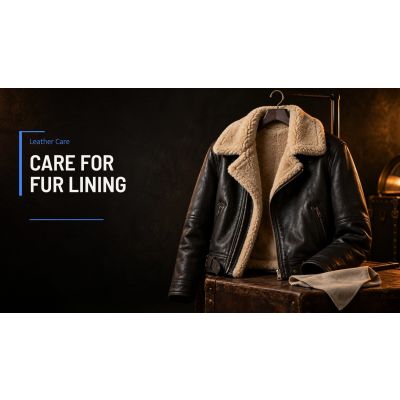
A leather jacket with a fur lining should not be put in a washing machine. The safe way to wash one starts with the care label sewn inside the garment and the maker's instructions, because the right method depends on the lining (real shearling, faux fur or a pile knit), the leather's finish and how the jacket is constructed. For most owners that means spot cleaning small marks, airing the jacket out, and handing a heavily soiled one to a cleaner who handles leather and fur.
This guide explains how to read the label, what a careful at-home spot clean looks like, how to handle a wet jacket and where professional help makes sense.
Key Takeaways
- The care label and the maker's instructions come before any general advice, including this article.
- Real shearling and faux fur are different materials and may need different handling.
- The American Fur Council says a real shearling should not be cleaned at home; heat is a common cause of damage, so keep a damp jacket away from radiators, heaters and hair dryers.
- If the label says specialist cleaning only, or the jacket is heavily soiled, use a cleaner experienced with leather and fur.
Check the care label and maker's instructions first
Inside most jackets there is a label near a side seam or under the collar with small symbols or a short line of text. It is the maker's statement of what the garment can take. Where it advises professional or specialist cleaning, follow it. Where the label is missing or faded, contact the maker or the shop the jacket came from and ask what they advise for that specific style.
Two questions are worth answering before touching the jacket with a cloth:
- What is the lining? A real sheepskin lining and a synthetic one behave differently when they get wet.
- What is the outside finish? Smooth, waxed, suede, distressed and washed leathers each react differently to water and cleaning products.
Leather is a natural material, so advice that suits one hide can mark another. This is why no single routine on this page can replace the instructions that came with the garment.
Know your lining: shearling, faux fur or pile
Shearling is, according to Wikipedia, the skin of a recently shorn sheep or lamb that has been tanned with the wool left on, giving a suede surface on one side and clipped wool on the other. The same article notes that the synthetic alternative is usually called sherpa.
That difference matters for washing. A jacket with a removable synthetic lining may have separate instructions for the lining and the shell. A jacket with a fixed real-shearling lining falls under the American Fur Council's advice on shearling, covered below. Browsing the fur range of shows jackets with fur details; check each product page for what it uses.
How to spot clean the leather shell
For a small mark on the outside leather of the jacket, and only where the care label permits, work gently and test first. A real shearling lining is not part of this: the American Fur Council says not to attempt to clean a shearling and to leave it to an Authorized Furcare Specialist.
- Choose a hidden spot, such as the inside of a hem, and test any cloth or cleaner there before using it on a visible area.
- Blot rather than rub, using a cloth that is barely damp.
- Keep moisture away from the lining.
- Let the jacket air dry on a broad hanger in a ventilated room, out of direct sun.
Cleaning products sold for leather vary in what they are designed for. Read what the product says about the finish it suits, and follow the garment's own label if the two disagree.
Marks on a faux fur lining
Synthetic linings may have separate instructions on the care label. Follow the maker's instructions for the lining, and contact the maker if they are not given.
What to do if the jacket gets wet
A jacket caught in rain is a more common problem than a stain. The American Fur Council advises shaking off accumulated moisture and hanging the garment to dry away from heat in a well-ventilated area. It also warns that direct heat can dry out and crack the material, and that a thoroughly saturated garment needs professional attention.
- Shake off droplets and open the jacket fully so air reaches the lining.
- Hang it on a broad, shaped hanger so the shoulders keep their form.
- Keep it away from radiators, heaters and hair dryers.
- Do not pack it into a bag while damp.
When to use a professional cleaner
A specialist is the sensible choice when the label calls for one, when the jacket is soiled over a large area, when a stain is oily or has set, or when the lining is real shearling. The American Fur Council says not to attempt to clean a shearling and to leave it to an Authorized Furcare Specialist. When choosing any cleaner, it is reasonable to ask about their experience with leather and sheepskin.
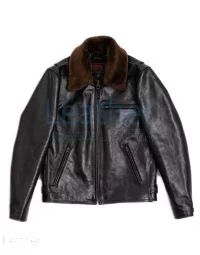
Describe the garment accurately: leather type, finish, lining and any earlier treatments. A cleaner who knows these details can choose a suitable process. If the jacket has a fur collar, as on this , check the product page and ask the shop what the collar is made of before choosing a cleaning method.
Everyday habits that reduce the need to wash
- Air the jacket after wearing it, especially after a warm day or a long ride.
- For a fur collar, follow the maker's guidance.
- Store it on a broad hanger in a ventilated wardrobe rather than in a plastic cover. The American Fur Council advises against plastic bags, mothballs and direct heat or light for shearling storage.
Common mistakes to avoid
Scrubbing a stain until the finish changes and using strong cleaners without testing are the shortcuts most likely to mark the leather. When in doubt, stop and ask the maker or a specialist.
Frequently Asked Questions
Can I put a leather jacket with a fur lining in the washing machine?
The usual answer is no. Leather and real shearling are tanned skins, and the American Fur Council says not to attempt to clean a shearling at home. Check the care label first, because a jacket with a fully removable synthetic lining may have separate instructions from the leather shell.
How do I clean a fur-lined leather jacket at home?
Limit any home cleaning to small marks on the outer leather, and only where the label permits. Test a hidden area, blot gently, keep moisture away from the lining and let the jacket air dry away from heat. Real shearling lining is left to a specialist, as is a large, oily or set stain.
How do I dry a fur-lined jacket after rain?
Shake off the water, open the jacket and hang it in a ventilated room away from radiators, heaters and hair dryers. Direct heat can dry out and crack leather. If the jacket is soaked through rather than damp, the American Fur Council advises seeking professional attention instead of drying it at home.
Is real shearling the same as faux fur lining?
No. Shearling is tanned sheep or lamb skin with the wool left on, while sherpa is the usual name for the synthetic alternative. The two may need different handling, so check the product description and the care label to confirm which lining a jacket has.
Written by the Leather Collection Editorial Team.