
 Canada
 Brazil
 Germany
 France
 Italy
 Switzerland
 Sweden
 Spain
 Great Britain
 Norway
 Russia
 South Africa
 Japan
 New Zealand
 Australia

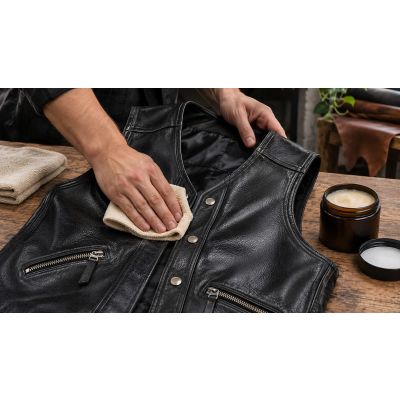
Short answer: brush off dust, wipe the vest with a barely damp soft cloth and a mild leather cleaner, dry it slowly away from heat, then condition lightly. Do not soak it, and keep cleaners away from patches and embroidery. Test every product on a hidden spot first, and follow the care label if the vest has one.
Before you start
Look at what you are cleaning. The method depends on the leather and the finish.
- Smooth, finished leather handles a damp cloth well.
- Suede or nubuck needs a dry brush and a suede-specific product, not a wet cloth.
- Patches and embroidery may be fabric, leather or vinyl, and the thread may run. Treat them as separate materials.
- The care label, if there is one, takes priority over general advice.
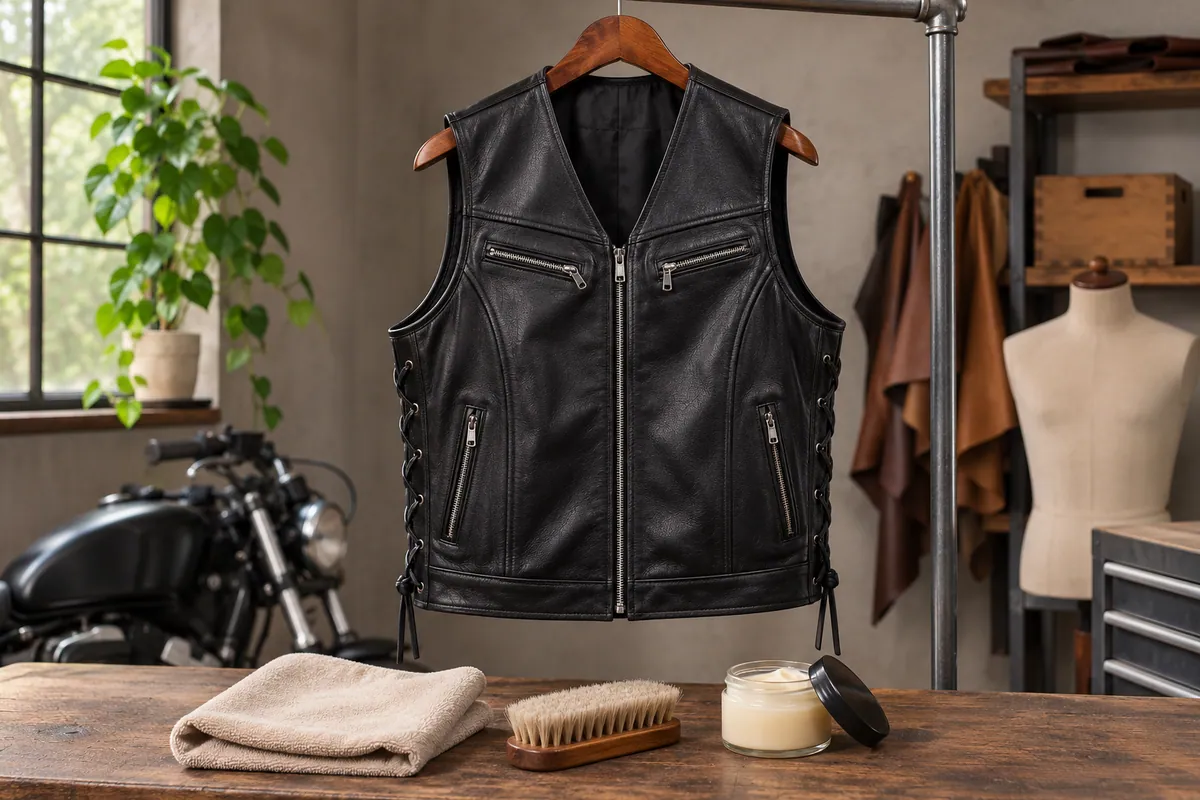
Gather a soft brush, two or three soft cloths, a mild leather cleaner, a leather conditioner, a wide hanger and a towel. Pick a clean, shaded area. Always test each product on a hidden spot, such as the inside hem, and wait until it dries to check for color change.
Step 1: dry brush and dust
Hang the vest on a wide hanger. Brush dust off the surface with a soft brush, working along the grain. Then get into the seams, the pocket openings and the underside of the collar, where grit collects. Grit left in place acts like sandpaper when you wipe, so this step matters.
Step 2: clean the leather
- Dampen a soft cloth with water and wring it out until it is barely damp. If you use a leather cleaner, apply a little to the cloth, not straight on the vest.
- Wipe in gentle strokes, one panel at a time, following the direction of the grain.
- Use a second clean, dry cloth to lift moisture straight away.
- Work from the top down, so drips do not mark cleaned areas.
Avoid saturating the leather. Too much water can leave marks and make the leather stiff once dry. Heavy road grime may need a second pass with a little more cleaner, not more water.
Step 3: sweat at the collar and armholes
Sweat shows up at the collar, the armholes and the lining. Wipe the collar with a cloth lightly dampened with cleaner, working from the inside out. For the lining, follow the care label: most linings can be spot-cleaned with a damp cloth, but they should not be soaked. If a smell lingers, our guide to getting smells out of a leather jacket applies to vests too. Let everything dry fully before you wear the vest again, because damp lining can transfer color.
Step 4: around patches and embroidery
This is where vest care differs from jacket care. Patches carry thread, dyes and backing materials that react differently from the leather.
- Do not apply cleaner or conditioner to patches. Mask them with a dry cloth or a piece of paper while you work.
- Dab, do not rub, if a patch needs cleaning. Use a cloth barely damp with water and test a small corner first.
- Check color fastness: bright threads can bleed onto leather and neighboring fabric when wet. Test on a hidden edge with a white cloth.
- Leave the stitches alone. Rubbing hard around the edges can fray the thread.
If you are planning to add patches, see patch placement and etiquette and clean the vest before you do.
Step 5: dry and condition
Let the vest air dry on a wide hanger, away from radiators, hair dryers and direct sunlight. Heat dries the leather out fast and can crack it. Drying can take several hours or overnight, depending on how damp it got.
When fully dry, condition lightly:
- Put a small amount of conditioner on a soft cloth.
- Rub into the leather in small circles, one panel at a time, avoiding patches.
- Wait the time stated on the product, then buff off any excess with a clean cloth.
Less is more. Too much conditioner leaves the leather greasy and can darken it. The right product depends on the finish, so check the label and test first. [No brand recommendations made.]
Keeping it clean
- After a ride, wipe the surface with a dry or barely damp cloth.
- Store it on a wide hanger in a cool, dry, ventilated spot, not in a plastic bag.
- Keep it away from rain when possible. If it gets wet, let it dry slowly, then condition.
- Rotate wear if you can, so the lining has time to dry between uses.
For general leather care, see how to care for leather gear. If you want jacket-focused routines, our guides on cleaning a leather jacket and cleaning and conditioning at home cover similar steps.
Pockets, zips and snaps
Vests have more small parts than they seem to. Pockets collect grit, zips seize up and snaps trap dirt.
- Pockets: turn them out if you can, shake out the debris and brush the seams. A damp cloth over a finger gets into corners.
- Zips: brush the teeth with a dry toothbrush. A little zip lubricant or wax on the teeth keeps them moving, but keep it off the leather.
- Snaps and hardware: wipe with a dry cloth. Moisture left on metal can cause spots on the leather beside it.
Handling stains
Not every mark is the same, and the wrong fix can set a stain.
| Mark | First step | Avoid |
|---|---|---|
| Road dust and mud | Let dry, brush off, then wipe | Rubbing while wet |
| Water spots | Dampen the whole panel evenly and let it dry slowly | Spot-drying with heat |
| Grease or oil | Blot at once and let it soak into an absorbent powder such as cornstarch overnight, then brush off | Water, which spreads it |
| Ink | Ask a leather specialist | Home solvents |
| Mold | Wipe with a dry cloth, air out and seek advice | Sealing it in a bag |
Stubborn or large stains are better handled by a leather specialist than at home, because experiments can make them permanent.
Cleaning a vest you wear over other layers
A vest is usually worn over a shirt, hoodie or jacket, so it picks up less body oil than a jacket does, but it takes more weather. Check these spots after a season of riding:
- Shoulders and upper back, where rain and dust land first.
- The lower hem, which catches road spray and saddlebag rub.
- The front edge and closure, where hands touch it constantly.
- Underarms and side seams, where the lining holds sweat.
A quick wipe of these areas once a month keeps buildup from setting in. If the vest has a lining, hang it open to air after each ride, so the inside dries as well as the outside.
Common mistakes
- Soaking the vest or putting it in a washing machine.
- Using household cleaners, which can strip the finish.
- Skipping the test on a hidden spot.
- Drying near heat.
- Putting conditioner on patches.
- Over-conditioning.
When to take it to a professional
Some jobs are better left to a leather specialist: large or set-in stains, mold, heavy fuel or oil contamination, color loss, and cracking from dryness. A professional can test the finish, choose the right product and avoid making the problem worse. If the vest has valuable patches, mention them when you hand it over. Home care is fine for routine dirt, but a mistake on a vest with sewn-on patches is expensive to reverse.
FAQs
Can you wash a leather vest?
Not in a washing machine. Clean it by hand with a barely damp cloth and a mild leather cleaner, then dry it slowly and condition it.
How do you clean a leather vest with patches?
Clean the leather and keep cleaner and conditioner off the patches. If a patch needs cleaning, dab it lightly with a barely damp cloth after testing a corner for color bleed.
How often should I condition a leather vest?
It depends on use, climate and finish. Many owners condition once or twice a year, or when the leather feels dry. Follow the care label.
How do you remove road grime from leather?
Brush off loose dirt first, then wipe with a barely damp cloth and a mild leather cleaner. Do not rub grit into the surface.
Can I use saddle soap?
Some saddle soaps suit some leathers, but they can darken or dry finished leather. Test a hidden spot and follow the care label before using one.
Need a vest to care for? Browse men's leather vests.