 Canada
  Brazil
  Germany
  France
  Italy
Italy  Switzerland
  Sweden
  Spain
Spain  Great Britain
  Norway
  Russia
  South Africa
  Japan
Japan  New Zealand
  Australia
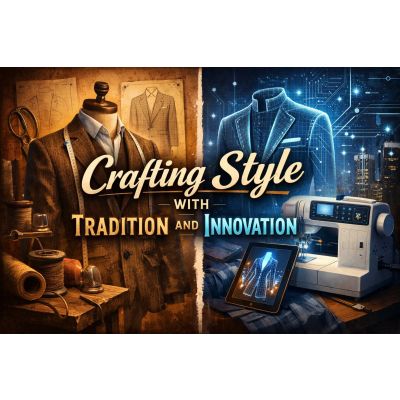
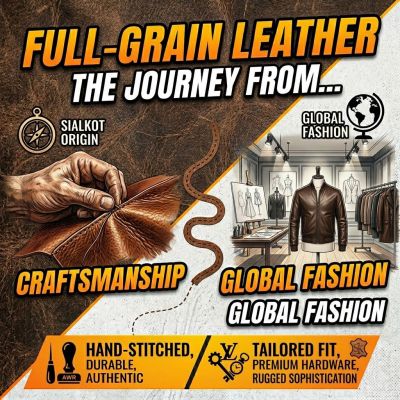
A leather jacket carries two histories at once: methods developed over centuries, and tools introduced much more recently. This article looks at what each side contributes to a finished garment and where they overlap. Leather Collection has made hand-stitched, made-to-order leather garments since 2009.
Key Takeaways
- Hand selection of hides, hand cutting and hand stitching remain central to leatherwork.
- Vegetable tanning is the older method; chrome tanning arrived in the 1800s and now produces most modern leather.
- Digital patterns and industrial machines add consistency, while judgment about the hide stays with the maker.
- Made-to-measure ordering combines both: a classic pattern adjusted to the wearer and stitched by hand.
What Tradition Contributes
For most of history, leather goods were cut and sewn by hand, and the skills involved still shape how good garments are made.
- Reading the hide: a hide varies in thickness, grain and stretch from one area to another, so a maker decides which part goes into a sleeve, a panel or a collar.
- Hand cutting and stitching: sharp knives, needles and waxed thread allow control at corners, curves and stress points.
- Classic patterns: the biker, bomber and cafe racer shapes have stayed in use for decades because they fit a wide range of builds and outfits.
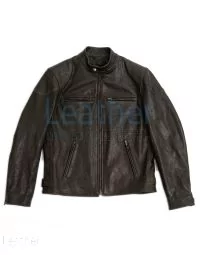
A jacket such as the shows this approach. Its product page describes a 1970s-inspired cafe racer silhouette in nubuck cowhide with a water-resistant finish, antique brass hardware, a YKK zipper and hand-stitched construction. Nubuck is also said to develop a richer patina over time with proper care.
Tanning: An Old Craft That Changed
Tanning turns raw hide into leather. According to Wikipedia, vegetable tanning uses tannins from plant sources such as bark and leaves, which bind to the collagen in the hide and make it more resistant to bacterial attack. It was historically the main method and takes longer than mineral tanning.
Chrome tanning appeared in the 1800s and now accounts for most modern leather. It finishes in under a day and produces flexible leather suited to garments and bags. Because of concerns about hexavalent chromium, researchers continue to study alternatives such as aldehyde-based wet white processes. The choice of tannage affects feel, color and how the leather ages.
Where Modern Tools Help
Technology in leatherwork is mostly about repeatability and fit rather than replacing the maker.
- Digital pattern making: patterns stored in software can be graded across sizes and adjusted to measurements without redrawing them by hand.
- Industrial machines: heavy-duty sewing machines handle thick leather and keep stitch length even, which matters on seams that carry load.
- Hardware and linings: zippers, snaps and technical linings are manufactured to consistent standards.
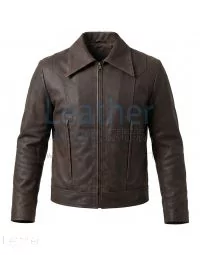
These tools make custom work easier to repeat. A made-to-measure piece such as the starts from a classic pattern that is then adjusted to the buyer's measurements.
Where Both Meet: Protective Riding Gear
Motorcycle jackets are one of the clearest cases of old and new working together. Leather has been used for riding for generations, and modern standards now define how protective clothing is tested. According to SATRA, EN 17092 groups motorcycle clothing into classes AAA, AA, A, B and C tests abrasion by simulating sliding on a real concrete road surface, passing only if no hole of 5 mm or more opens in the layer closest to the body, and also assesses tear and seam strength.
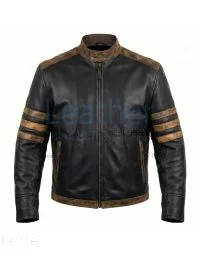
A jacket with removable armor, such as the , combines a traditional leather shell with separate protectors; riders should check whether the listing names the protector standard and level, since not every leather jacket is designed for riding.
Made to Order: Putting Both Together
Made-to-order production is where the two approaches meet most directly. The pattern comes from a proven cut, the measurements come from the buyer, and the cutting and stitching are done after the order is placed rather than from stock. Leather Collection has worked this way since 2009. For the buyer, the practical benefit is control: sleeve length, body length and chest width can be adjusted on suitable styles, and the lining or hardware can be chosen to match how the garment will be used.
The trade-off is planning. A garment made after the order needs accurate measurements, so the time spent measuring correctly is the most useful step in the process.
How to Judge a Leather Garment
Whatever the method, a few points show how a garment was made:
- Seams: even stitch length, no skipped stitches, and reinforced stress points at pockets and armholes.
- Hardware: zippers that run smoothly and snaps that close firmly.
- Leather surface: a consistent grain and finish across panels, with natural variation accepted as part of the material.
- Fit: sleeves and shoulders that allow movement without the hem riding up.
Browse the full Men's Leather to compare classic cuts and modern variations, and to see how each style handles the balance described above.
Frequently Asked Questions
What is the difference between vegetable-tanned and chrome-tanned leather?
Vegetable tanning uses plant tannins and takes longer; it was historically the main method. Chrome tanning uses chromium salts, finishes in under a day and accounts for most modern leather. The method influences the feel, color range and aging of the finished hide, so neither is simply better for every garment.
What does made to measure mean for a leather jacket?
Made to measure means the pattern is adjusted to the wearer's own measurements before cutting, instead of using a fixed stock size. Leather Collection makes its garments to order and hand-stitched, which allows adjustments such as sleeve length, body length and chest width on suitable styles.
Is hand-stitched leather stronger than machine-stitched leather?
Not automatically. Strength depends on thread type, stitch length, tension and where the seam sits. Hand stitching gives control at corners and curves, while industrial machines give even stitches on long straight seams. Many garments use a mix, with each method applied where it suits the seam.
What does full-grain mean?
Full-grain leather keeps the natural grain surface of the hide instead of sanding it away. Because the surface is intact, markings stay visible and the leather tends to develop a patina with use. Nubuck, by contrast, has a lightly sanded grain surface that gives a velvety texture.
Written by the Leather Collection Editorial Team.