 Canada
  Brazil
  Germany
  France
  Italy
Italy  Switzerland
  Sweden
  Spain
Spain  Great Britain
  Norway
  Russia
  South Africa
  Japan
Japan  New Zealand
  Australia
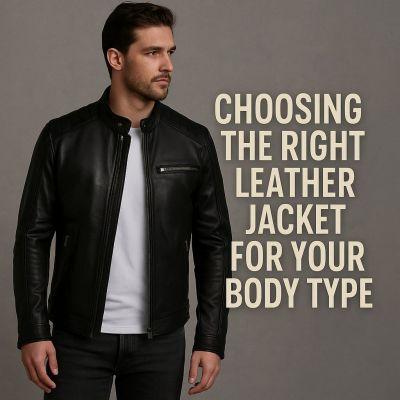
Choosing among comes down to fit more than style. A jacket that follows the wearer's shoulders, waist and torso looks sharper and moves better, and body shape is a practical starting point for narrowing down cut, length and detailing.
Key Takeaways
- Identify the body shape first: rectangle, triangle, inverted triangle, hourglass or oval.
- Structure and layered details add definition to a straight frame, while clean lines suit broad shoulders.
- Belted or fitted waists suit hourglass shapes, and longer single-breasted cuts suit a fuller midsection.
- Fit is checked at the shoulder seam, sleeve end and chest, with room for the layer normally worn underneath.
Identify Your Body Type
Before buying a leather jacket, it helps to understand body shape. The most common male and female body types include:
- Rectangle or straight: shoulders, waist and hips are similar in width.
- Triangle or pear: hips are wider than shoulders.
- Inverted triangle: broad shoulders and narrow hips.
- Hourglass: balanced bust and hips with a defined waist.
- Oval or round: fuller midsection with a less defined waist.
Knowing the shape makes it easier to choose a jacket that balances proportions. None of these categories is a rule, and real bodies often sit between two of them, so the points below are starting guides to be checked against a try-on.
Jackets for Rectangular Body Types
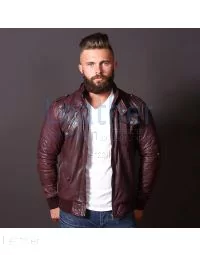
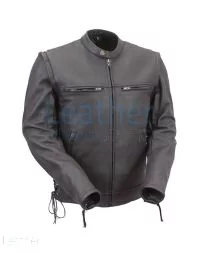
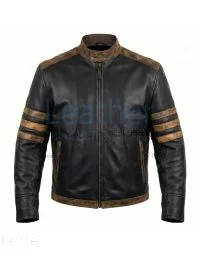
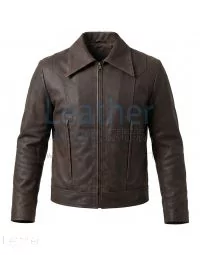
A straight or rectangular frame suits jackets with structure and layering details. Biker jackets, , and jackets with shoulder pads or zippered pockets add dimension and create the impression of a more defined shape. Collars and linings help too, as on the . Cropped jackets are also an option, as they emphasize the waist and add curves.
Jackets for Triangle and Pear Shapes
For pear-shaped bodies, the goal is to broaden the shoulders while keeping the hips visually lighter. Look for jackets with structured shoulders, epaulets or padded designs. A-line or flared jacket styles can balance proportions, while darker colors on the lower half keep the hips from appearing wider.
Jackets for Inverted Triangle Shapes
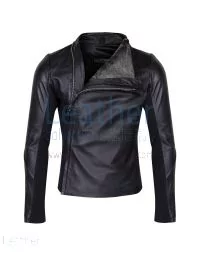
With broad shoulders and a narrow waist, it is worth avoiding extra bulk on the upper body. Jackets with minimal shoulder padding suit this shape. A , a single-breasted cut or vertical seams create a sleek silhouette without emphasizing width.
Jackets for Hourglass Shapes
Hourglass figures benefit from jackets that highlight the waist. Belted designs, fitted waists and cropped cuts, such as a , accentuate curves and keep balance between the bust and hips. Boxy or very loose jackets tend to hide the natural shape.
Jackets for Oval and Round Shapes
With a fuller midsection, the aim is to create vertical lines and lengthen the torso. A slimmer fit, single-breasted closure and longer cut work well. Darker shades and subtle detailing on the shoulders draw attention upward, and bulky textures around the stomach are worth avoiding. Riders with a larger or taller frame can also compare , which are cut for those proportions.
Fit and Comfort Are Key
Whatever the body type, a leather jacket should fit comfortably. There should be room to wear a shirt or light sweater underneath, and the sleeves and shoulders should allow easy movement. Avoid overly tight or baggy jackets, as both compromise comfort and appearance.
A Quick Fit Check
A few checks in front of a mirror settle most fit questions:
- Shoulders: the shoulder seam should sit at the edge of the shoulder. This is the hardest part of a jacket to change later.
- Sleeves: they should end around the wrist bone with the arms relaxed. Motorcycle styles are often cut longer to cover the wrist when the arms are extended.
- Chest and waist: the jacket should close without pulling, with room for the layer normally worn underneath.
- Movement: reach forward and cross the arms. Strain across the upper back means the jacket is too tight.
- Length: the hem usually sits around the belt line, shorter for a cropped style and longer for a car-coat or oval-shape cut.
Because leather gives only a little with wear, the size that fits on the first day is the safer choice. Made-to-measure ordering removes much of this guesswork by building the jacket from the wearer's own measurements.
Frequently Asked Questions
How snug should a leather jacket be?
A leather jacket should feel close but not restrictive. The chest should close without pulling, the shoulder seams should sit at the shoulder edge, and there should be room for the layer worn beneath it. Leather gives slightly with wear, but a jacket that is tight across the upper back on day one is the wrong size.
Which leather jacket style suits a broad-shouldered build?
Inverted triangle shapes are usually flattered by clean, minimal-padding styles such as moto jackets with single-breasted closures and vertical seams. These add no bulk at the shoulders. Structured shoulders, epaulets and heavy padding add width where it is not needed, so they are better kept for narrower shoulders.
Can a leather jacket be altered after buying?
Some changes, such as sleeve length or hem adjustments, are possible with a specialist. Moving a shoulder seam effectively means rebuilding the jacket, so shoulder fit should be right from the start. Ordering to personal measurements avoids most alterations because the pattern is cut for the wearer.
Does body type matter for a motorcycle jacket?
Yes, with extra points to check. A riding jacket must fit in a riding position, with sleeves long enough for extended arms, and any armor must sit over the shoulders and elbows. Fit should be judged with the arms forward, not only standing upright, and with the layers worn on the bike.
Written by the Leather Collection Editorial Team.