 Canada
  Brazil
  Germany
  France
  Italy
Italy  Switzerland
  Sweden
  Spain
Spain  Great Britain
  Norway
  Russia
  South Africa
  Japan
Japan  New Zealand
  Australia

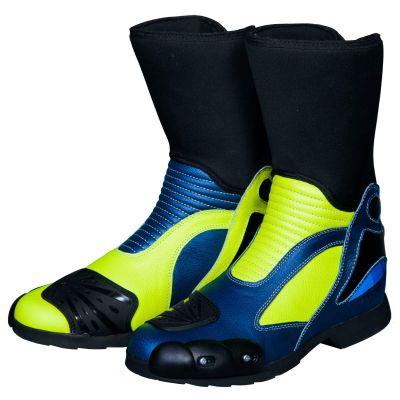
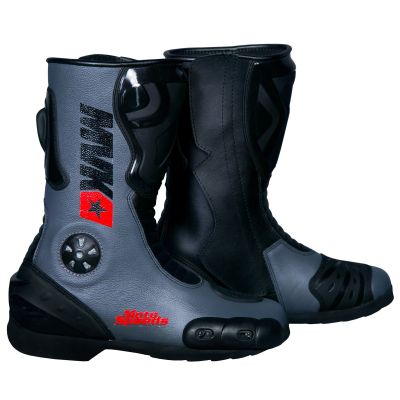
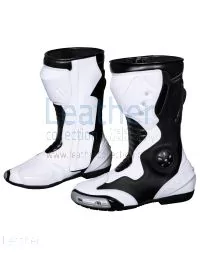
Boots take the first hit from pegs, gear shifters and the road. The are modeled after the boots from Alex Rins' 2017 Suzuki season, and this guide covers what the listing specifies, what boot standards measure and how to fit and care for a pair.
Key Takeaways
- The listing gives 1.2-1.3 mm milled cowhide, hand-stitched, with a YKK coil zipper.
- TPU guards cover the ankle, heel and shin, with a reinforced shift plate and toe box and replaceable TPU toe sliders.
- A dual rubber compound sole is described as slip-resistant and oil-resistant, with air vents at the shin.
- EN 13634 sets motorcycle boot requirements; certification for a specific pair should be confirmed on its listing.
Alex Rins and the 2017 Season
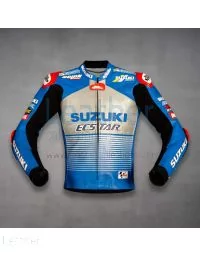
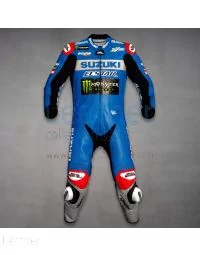
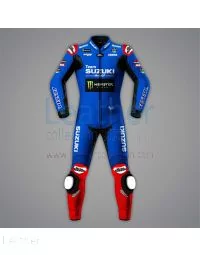
Rins made his MotoGP debut in 2017 with Team Suzuki Ecstar, alongside Andrea Iannone. A wrist injury at the Texas round in April kept him out until Assen two months later, and he finished the year 16th with 59 points, with a fourth at Valencia and a fifth in Japan as his top results (Alex Rins profile). Replica boots, suits, jackets and gloves from his career are grouped in the category, and a matching suit is the .
What the Boot Listing Specifies
The product page lists these construction details:
- 1.2-1.3 mm milled cowhide, hand-stitched to order
- TPU molded guards at the ankle, heel and shin
- A reinforced shift plate and toe box for gear-shifter wear
- Replaceable TPU toe sliders that wear instead of the outer leather
- A dual rubber compound race sole, slip-resistant and oil-resistant
- Air vents at the shin and a YKK coil zipper closure
What Boot Standards Measure
EN 13634 is the European standard for motorcycle boots. It covers the height of the upper, impact cut and abrasion resistance of the upper and a transverse rigidity test of the whole boot, with shin and ankle impact protection as an optional property (SATRA summary of EN 13634). The replica listing describes construction but does not cite the standard, so any specific pair should be checked on its own page.
Fit, Break-In and Care
- Fit: snug but not painful, with the heel held down when walking and room to move the toes.
- Break-in: expect stiffness at first; leather boots soften over several rides.
- Care: brush off dirt after wet rides and follow the maker's care instructions; the right cleaner or conditioner depends on the leather finish and construction.
- Inspection: check the soles, toe sliders, zipper and stitching regularly and replace worn parts.
Who These Boots Suit
A race-style boot suits sport riding, occasional track days and fans of MotoGP replica gear. It is less comfortable than a street shoe for long walks. Riders comparing similar designs can browse .
Frequently Asked Questions
Are these boots the same as the ones Rins raced in?
No. They are modeled after the boots from his 2017 Suzuki season and produced independently of the rider, the team and its sponsors. The materials and protection should be judged from the product listing, not from the original race boots.
What does EN 13634 test?
The standard covers the height of the upper, impact cut and abrasion resistance of the upper, and transverse rigidity, which is the boot's resistance to crushing from the side. Shin and ankle impact protection is an optional property that a maker may test for separately, so the marking on a specific pair should be checked.
How should motorcycle racing boots fit?
Racing boots should hold the foot and ankle firmly without crushing the toes. The heel should stay down when walking, and the toes should have a little room to move. Stiff leather softens with use, so a boot that feels snug but tolerable at the start is usually right.
Are racing boots comfortable for walking?
Not as comfortable as street shoes. Rigid guards, a stiff sole and a high shaft are designed for control on the bike, and they limit ankle movement on foot. Racing boots suit sport riding and track days more than all-day walking.
Written by the Leather Collection Editorial Team.